Introduction
Every task a veterinary technician does sits inside two frames. The first is the law: the state veterinary practice act and the board rules that say what a credentialed technician may do and how closely a veterinarian must supervise it. The second is ethics: the professional code that says how you should behave when the law is silent. This guide covers the NAVTA Veterinary Technician/Nurse Code of Ethics, the acts a technician may never perform, the levels of supervision, informed consent, recognizing and reporting suspected animal abuse, and professional conduct online. The VTNE lists professional ethics and signs of suspected animal abuse as knowledge areas, so expect scenario questions that ask what you should do next.2
Key facts
- The NAVTA Code of Ethics says technicians shall uphold the laws and regulations of their state that apply to their role, and shall protect the confidentiality of client-provided information.1
- NAVTA does not judge breaches of ethics. Discipline belongs to the state boards and credentialing bodies.1
- In Pennsylvania, neither certified veterinary technicians nor veterinary assistants may perform surgery, diagnose, prognose, prescribe, or attest to health status.4
- Direct supervision means a licensed veterinarian is readily available on the premises. Indirect supervision means the veterinarian is off the premises, has given written or oral instructions, and can be reached by telephone or other immediate communication.3
- Immediate supervision means the veterinarian is immediately available, for example in the same room.3
- The AVMA considers reporting suspected cruelty an ethical responsibility when an educational or supportive approach is not appropriate. Some jurisdictions make veterinarians mandated reporters.8
- Informed consent requires that the person giving it is competent, has adequate information about the proposed treatment and acts voluntarily.11
How the VTNE tests this
- Choose whether a task is within a technician's scope or must be done by the veterinarian (Domain 10; K46 professional ethics, including the Veterinary Technician Code of Ethics).2
- Match a task to a supervision level, or identify the supervision term from its definition.
- Identify signs that suggest non-accidental injury and pick the correct next step (K49 signs of suspected animal abuse, including physical and emotional trauma).2
- Name the elements of valid informed consent and the technician's part in obtaining it.
- Pick the ethical response to a confidentiality, social media or impaired-colleague scenario.
Core concepts
Ethics and law are different
A law is enforced by the state. A code of ethics is a profession's statement of how its members should behave. The NAVTA code covers four areas of ethical principles: professional standards and responsibility, animal care and welfare, teamwork and public health, and workplace culture and professional integrity. It also lists ideals, such as addressing burnout and compassion fatigue and engaging in client education.1 The NAVTA oath commits the technician to aiding animals and society, alleviating animal suffering, promoting public health, and lifelong learning.1
| Code area | Example principle | What it looks like at work |
|---|---|---|
| Professional standards and responsibility | Uphold state laws and regulations; lifelong learning through mandated continuing education; take responsibility for actions | Knowing your state's task list; keeping CE current; reporting your own medication error |
| Animal care and welfare | Alleviate animal suffering with empathy and skill | Telling the veterinarian when a patient's pain score rises |
| Teamwork and public health | Collaborate with veterinarians; promote One Health by helping control zoonoses and educating the public | Explaining rabies vaccination and parasite control to clients |
| Workplace culture and professional integrity | Protect client confidentiality; safeguard the public against those deficient in competence or ethics | Not discussing clients outside work; reporting an impaired coworker through the proper channel |
Source: NAVTA Veterinary Technician/Nurse Code of Ethics (2026).1 Workplace examples are teaching illustrations.
The practice act and the four reserved acts
Each state has a veterinary practice act. The AVMA model act defines the practice of veterinary medicine as to diagnose, prognose, treat, correct, change, alleviate, or prevent animal disease, illness, pain, deformity, defect, injury, or other conditions by any method.3 State rules then reserve some of these acts for the licensed veterinarian. Across the states sampled here, a similar core list appears:
- Diagnose: name the disease or condition.
- Prognose: predict the outcome.
- Prescribe: choose drugs, treatments or appliances.
- Perform surgery: technicians may assist but not operate.
Pennsylvania adds "attest to health status".4 Oregon bars certified technicians from making a diagnosis, prescribing treatment, performing surgery except as an assistant, and signing a rabies vaccination or other animal health certificate.5 Texas bars non-veterinarians from surgery, diagnosis and prognosis, prescribing drugs and appliances, and starting treatment without prior instruction from a veterinarian, except in an emergency without expectation of compensation.6
Oregon also lets a technician record the client's statements and their own observations on admission, but not their opinion on the diagnosis.5 That is the practical line: you may write "left forelimb not bearing weight, swelling over the carpus". You may not write or tell the client "it is broken".
Supervision levels
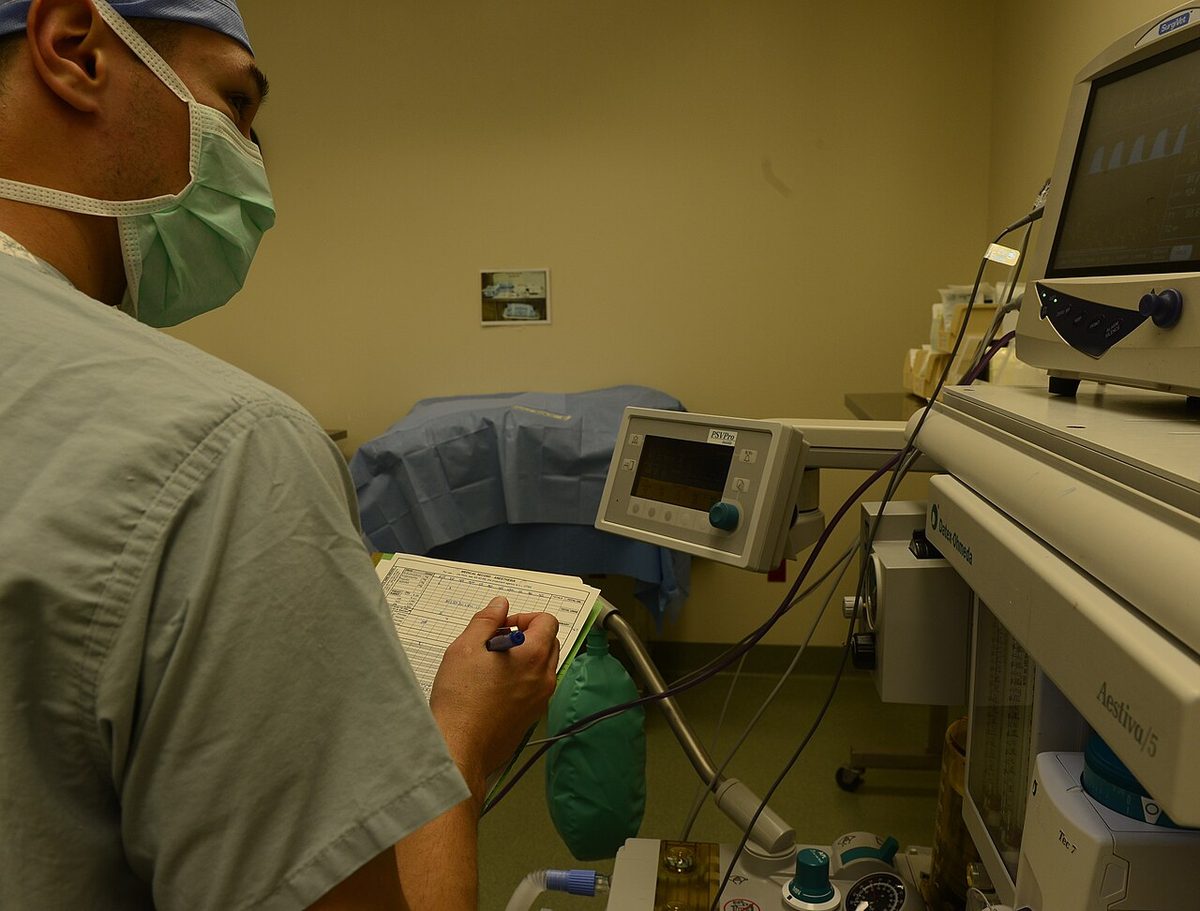
Supervision describes where the veterinarian is while you work. The AVMA model act defines two levels and suggests states consider a third:3
- Immediate: the veterinarian is immediately available, for example in the same room.
- Direct: the veterinarian is readily available on the premises and has assumed responsibility for the care.
- Indirect: the veterinarian need not be on the premises, has given written or oral instructions, and is readily available by telephone or other immediate communication.
Texas also uses "general supervision", under which a licensed technician may draw blood and take samples for testing.6 Names and task lists differ from state to state, so always learn your own state's rules.
| Task | Pennsylvania CVT | Oregon CVT | Texas licensed technician |
|---|---|---|---|
| Induce and maintain anesthesia | Direct only | Induce as prescribed, under supervision | Induce under direct or immediate |
| Dental prophylaxis | Direct only | Permitted under supervision | Not listed (vet sets level) |
| Tooth extraction | Not listed | Immediate | Loose teeth by hand, no elevator, dogs and cats: direct or immediate |
| Suture skin incisions or lacerations | Not listed | Not listed | Direct or immediate |
| Radiographs, IV catheter, bandages, injections | Indirect (direct if patient is anesthetized) | Permitted under supervision | Vet sets level |
| Rabies vaccine | Vaccines not required by law to be given with a vet present: indirect | Direct | Direct, after a VCPR |
| Draw blood, take samples | Not listed | Permitted under supervision | General |
| Euthanasia | Not listed | Not listed | Immediate (any non-veterinarian) |
Sources: 49 Pa. Code 31.31;4 OAR 875-030-0040;5 22 Tex. Admin. Code 573.10.6 "Not listed" means the rule does not name the task, not that it is banned.
Procedure or technique
Checking a task before you do it
- Ask whether the task is one of the reserved acts: diagnose, prognose, prescribe or perform surgery. If yes, it belongs to the veterinarian.
- Check that a veterinarian has ordered it, in writing or orally. Texas, for example, bars starting treatment without prior instruction except in an emergency.6
- Check your state's rule for the supervision level, and whether the veterinarian is where that level requires.
- Check that you are trained and competent. The Pennsylvania rule places ultimate responsibility on the veterinarian for confirming the person given a duty is competent.4
- Do the task and record it.
Emergencies are the main exception. Pennsylvania lets a certified technician give life-sustaining emergency care without supervision, but the technician must immediately take steps to get a veterinarian's direct supervision, and the care is limited to listed duties.4
Supporting informed consent
Informed consent is the client's agreement to a procedure after being told enough to decide. A UK study of consent forms states that consent requires a competent person, adequate information and voluntary agreement, and it found that forms record the procedure, the costs and the person consenting but often fail to record the consent discussion itself.11 A shared decision-making model uses choice talk, options talk and decision talk; in the options stage the team explains the benefits, risks and financial costs of each option.12 The technician's role:
- Confirm the person signing is the owner or the owner's authorized agent, and is an adult able to consent.
- Check the form names the correct patient and procedure and carries an estimate.
- Answer questions you are allowed to answer, such as fasting and discharge times. Send questions about the diagnosis, risk or prognosis to the veterinarian.
- Pause and ask, "What questions do you have?" A veterinary nurse in the room helps with explanations.12
- Get the signature, witness it if your practice requires, and file the form in the record.
Suspected animal abuse
The AVMA notes a strong correlation between animal abuse and interpersonal violence, including child abuse, elder abuse and domestic violence.8 The technician is often the first to notice. Your job is to observe, record and tell the veterinarian, not to accuse the client.
| Type | What you may see or hear |
|---|---|
| Injuries | Burns, bruising, stab wounds, gunshot wounds, ingrown collar, scars |
| Fracture pattern | Multiple fractures, fractures in more than one body region, transverse fractures, fractures presented late, fractures at different stages of healing |
| History | History inconsistent with the injuries; family members give changing or different histories |
| Client behavior | Lack of concern about the injuries; repeated failure to follow up on serious conditions |
Source: Arkow, Vet Med (Auckl) 2015.9
- Treat the patient first. Pain relief and stabilization come before paperwork.
- Write down exactly what the client said, in quotation marks, and what you saw, measured and photographed.
- Tell the veterinarian privately. The receiving veterinarian has a duty to document the animal's condition at first presentation, and the animal and anything from it or its environment can be evidence.10
- Follow the practice's written protocol. The AVMA advises practices to have one for recognizing and reporting suspected cruelty.8
- Report to the proper authority as your state law and practice protocol direct. Immunity for good-faith reporters and release of records without consent vary by state.89
Flowchart
Species differences
The legal rules apply the same way to dogs, cats, horses, farm animals and exotics. The Pennsylvania task list states that its scope covers both large and small animal practice.4 Some rules are species-specific: the Texas extraction permission covers only loose teeth in dogs and cats.6 For dogs and cats, abuse indicators in Table 3 come mostly from companion-animal work; one fracture study cited by Arkow flagged young male dogs of dominant breeds such as Staffordshire bull terriers.9 In food animals, the extra legal layer is drug residue law, covered in the pharmacology guides.
Safety, legal and client education
- Confidentiality. The AVMA principles say a veterinarian must not reveal client confidences unless required by law or necessary to protect the health and welfare of other people or animals. Medical records belong to the practice and are confidential.7 NAVTA places the same duty on technicians.1
- Social media. A patient photo, a patient's name, or a story that lets people recognize a client can reveal confidential client information. Do not post it on a personal account. The AVMA principles say record information must not be released except as required or allowed by law, or by client consent, so clinic posts need the practice's policy and the client's consent. The AVMA principles also ask for professional conduct toward colleagues, clients and the public.7
- Titles. The AVMA principles say only those credentialed as veterinary technicians in their state should be represented as credentialed veterinary technicians.7
- Impaired or unsafe colleagues. The AVMA model act requires credential holders to report in good faith any veterinarian or credentialed technician they reasonably believe to be impaired.3 NAVTA asks technicians to safeguard the public and profession against people deficient in competence or ethics.1
- Client questions. When a client asks "Is it cancer?" the answer is, "That is a question for Dr. Smith. I will make sure she knows you asked."
Common mistakes and exam traps
- Confusing direct and immediate. Direct means on the premises; immediate means right there, as in the same room.3
- Thinking a technician may diagnose "obvious" problems such as ear mites. Telling the client what the condition is counts as diagnosis.
- Treating the consent form as the consent. The signature records a discussion; it does not replace it.11
- Confronting a client you suspect of abuse. Document and tell the veterinarian, then follow the protocol.
- Assuming NAVTA disciplines technicians. The state board does.1
- Answering with one state's rule as if it were national. Questions usually expect the general principle: reserved acts belong to the veterinarian, and supervision varies by state.
Memory aids
DPPS (Diagnose, Prognose, Prescribe, Surgery): the acts reserved for the veterinarian. Pennsylvania and Texas list all four; Oregon lists diagnosis, prescribing and surgery. (memory aid)
I-D-I: In the room, Down the hall, In another place: Immediate, Direct, Indirect, from closest to farthest, matching the AVMA model act definitions. (memory aid)
Competent, Informed, Voluntary: the three conditions for valid consent. (memory aid)
See it, Say it, Store it: for suspected abuse, observe, tell the veterinarian, and document in the record. (memory aid)
Quick review
- Law is enforced by the state board; ethics is the profession's guide to conduct.
- The NAVTA code requires following state law, CE, confidentiality and honest responsibility for your actions.
- NAVTA does not discipline; state boards do.
- Technicians may not diagnose, prognose, prescribe or perform surgery.
- Immediate supervision: vet in the same room.
- Direct supervision: vet on the premises and readily available.
- Indirect supervision: vet off site, has given orders, reachable by phone.
- Task lists and levels vary by state; learn your own.
- Valid consent needs a competent person, adequate information and a voluntary decision.
- Abuse indicators include multiple fractures at different stages of healing and a history that does not fit the injury.
- For suspected abuse: treat, document exact words and findings, tell the veterinarian, follow protocol.
- Never post identifiable patient or client information on personal social media.