Introduction
A veterinary hospital is a busy workplace full of hazards: chemicals, anesthetic gases, needles, heavy patients and frightened animals that bite. Technicians often run the safety program day to day. They label secondary bottles, keep the Safety Data Sheet binder current, check the scavenging system, train new hires and manage the supply shelves. The VTNE lists environmental health and safety procedures as a knowledge area, including handling and disposing of hazardous material, personal safety, evacuation procedures, safety plans and equipment.1 This guide covers the OSHA Hazard Communication Standard, the hierarchy of controls, waste anesthetic gas, sharps, bite and scratch response, ergonomics, emergency action plans and inventory basics.
Key facts
- All hazardous chemical labels must show pictograms, a signal word, hazard and precautionary statements, the product identifier and supplier identification.5
- Safety Data Sheets (SDS) use a uniform 16-section format. Sections 1 to 11 and 16 are mandatory; sections 12 to 15 may be included but are not mandatory under OSHA.7
- SDSs must be readily accessible to employees in their work area during each work shift. Electronic access is allowed if it creates no barrier to immediate access.3
- Hazard communication training is required at the time of initial assignment and whenever a new chemical hazard is introduced.3
- In the NIOSH hierarchy of controls, elimination and substitution are most effective; PPE is the last line of defense.2
- NIOSH recommends a limit of 2 ppm for halogenated anesthetics used alone, and 25 ppm (time-weighted average) for nitrous oxide.8
- Do not recap needles after use, and do not overfill sharps containers.10
- A healthy dog, cat or ferret that exposes a person should be confined and observed daily for 10 days.11
- An employer with 10 or fewer employees may communicate the emergency action plan orally; larger employers must have it in writing.14
How the VTNE tests this
Workplace safety appears under the environmental health and safety knowledge area (K37).1 Expect short scenarios. A bottle of disinfectant has lost its label. A new hire asks where the SDSs are. A coworker is bitten by a cat. You smell isoflurane in recovery. The question asks for the best next step or the rule that applies. Know the label elements, the SDS sections most often asked about (first aid is section 4, PPE is section 8), the order of the hierarchy of controls, and the first actions after a bite or needlestick. Inventory questions usually ask what a reorder point is or how to turn a turnover ratio into days on the shelf.
Core concepts
The safety program
Employers in veterinary settings have a legal and ethical duty to protect employees, volunteers, students, clients and patients. The first step is a written safety and health program. The program should include evaluating employees for pre-exposure vaccination against rabies, tetanus and influenza, and training staff to report, document and evaluate exposure incidents such as bites.2 Training should happen before workers start their duties and periodically, at least annually or when procedures change.2
Hierarchy of controls
The hierarchy of controls ranks ways to protect workers from most to least effective. Elimination removes the hazard. Substitution replaces it with something safer. Engineering controls isolate people from the hazard at the source, for example an active scavenging system. Administrative controls change the way people work, such as training, schedules and a written protocol. Personal protective equipment (PPE), such as gloves, gowns and eye protection, is the last line of defense.2 Merck states that engineering controls are more effective than administrative controls and PPE, and that PPE should always be worn when other controls cannot effectively decrease exposures.2
OSHA Hazard Communication Standard
The Hazard Communication Standard (29 CFR 1910.1200), often called HazCom or the right-to-know rule, has three working parts in a clinic: labels, SDSs and training.
Labels. Every hazardous chemical label from the supplier must carry the product identifier, a signal word ("Danger" or "Warning"), hazard statements, precautionary statements, pictograms and the supplier's name, US address and phone number.5 A pictogram is a symbol on a white background inside a red border. Each pictogram may appear only once on a label.6 A portable container does not need a label if it holds a chemical transferred from a labeled container and is meant only for the immediate use of the person who did the transfer.3 A spray bottle of diluted disinfectant that sits on the counter for the whole team is not immediate use, so it needs a label.
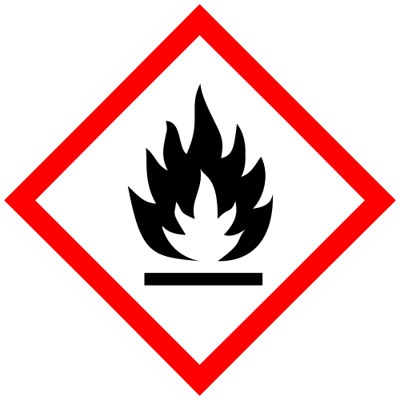
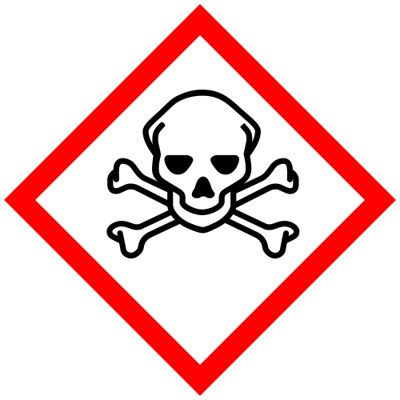
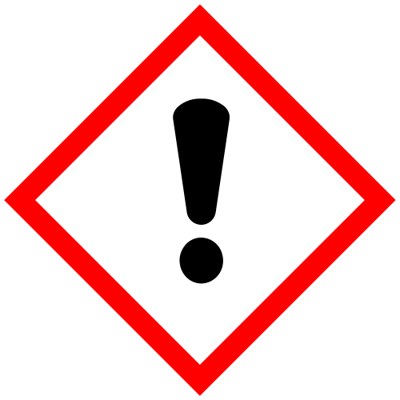
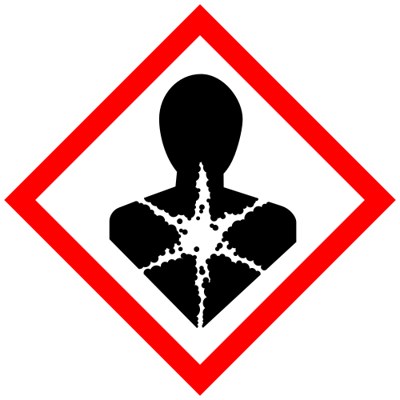
| Pictogram | Hazards it covers |
|---|---|
| Health hazard | Carcinogen, mutagenicity, reproductive toxicity, respiratory sensitizer, target organ toxicity, aspiration toxicity |
| Flame | Flammables, pyrophorics, self-heating, emits flammable gas, self-reactives, organic peroxides |
| Exclamation mark | Irritant (skin and eye), skin sensitizer, acute toxicity (harmful), narcotic effects, respiratory tract irritant |
| Gas cylinder | Gases under pressure |
| Corrosion | Skin corrosion or burns, eye damage, corrosive to metals |
| Exploding bomb | Explosives, self-reactives, organic peroxides |
| Flame over circle | Oxidizers |
| Skull and crossbones | Acute toxicity (fatal or toxic) |
| Environment (non-mandatory) | Aquatic toxicity |
Source: OSHA Hazard Communication Standard Pictogram QuickCard.6
Safety Data Sheets. The manufacturer, importer or distributor must provide an SDS for each hazardous chemical, in a uniform format with numbered sections.4 The clinic must keep copies in the workplace and make them readily accessible during each work shift.3 The sections technicians use most are section 2 (hazard identification), section 4 (first-aid measures), section 6 (accidental release measures, the spill cleanup plan), section 7 (handling and storage) and section 8 (exposure controls and personal protection).4
Training. Employers must give effective information and training on hazardous chemicals in the work area at the time of initial assignment and whenever a new chemical hazard is introduced.3
Waste anesthetic gas
Waste anesthetic gases (WAGs) are inhalant anesthetics that escape into the room instead of being captured by the scavenging system. They leak from anesthesia machines, vaporizers, breathing circuits, uncuffed endotracheal tubes and faulty scavenging systems. Patients also exhale them during recovery, and vaporizer filling spills add more.8 Short-term exposure causes fatigue, headache, dizziness and irritability.8 OSHA has no standard that specifically addresses WAGs.9
Ways to lower exposure include leak tests and routine vaporizer servicing, a working scavenging system, filling vaporizers in a well-ventilated area or hood, and not turning on the vaporizer until the circuit is fully connected to the patient. Poorly fitted masks and poor ventilation in surgical areas lead to greater inhalation of WAGs.8 A minimum of 15 air changes per hour in operating rooms and 6 in recovery rooms has been recommended.8
Sharps
Needlestick prevention starts before the needle comes out: plan safe disposal, restrain the animal well and organize the work area. Avoid passing sharps, keep needles pointed away, and stop if you feel rushed. Do not recap needles after use. Place sharps containers where they are easy to reach, do not overfill them, and never put your hands into one.10 OSHA gives prohibiting two-handed recapping as an example of a work practice control.19
Ergonomics
Ergonomics is fitting the job to the person. Risk factors for musculoskeletal disorders (MSDs) include lifting heavy items, bending, reaching overhead, pushing and pulling heavy loads, awkward postures and repetitive tasks.15 In animal work, the engineering answer to lifting animals and heavy loads is mechanical lifts and storage that reduces lifting, backed by training in injury prevention.16 Early reporting of MSD symptoms helps prevent serious injury.15
| Hazard | Example control | Regulation or guidance |
|---|---|---|
| Hazardous chemicals (disinfectants, formalin) | Labels, SDS access, training, PPE from SDS section 8 | OSHA HazCom, 29 CFR 1910.1200 |
| Waste anesthetic gas | Scavenging, leak tests, cuffed tubes, fill vaporizers in ventilated area | No specific OSHA standard; NIOSH exposure limits |
| Needles and blades | No recapping, sharps container at point of use | NJ veterinary toolkit; OSHA work practice controls |
| Bites and scratches | Trained handlers, restraint, report every bite | Safety program; NASPHV rabies compendium |
| Lifting and posture | Mechanical lifts, storage that reduces lifting | OSHA ergonomics guidance; animal worker health literature |
| Fire and other emergencies | Emergency action plan, alarm, staff trained to assist evacuation | OSHA 29 CFR 1910.38 |
Sources: OSHA,391415 Merck,8 NJ Department of Health,10 NASPHV.11
Procedure or technique
After a bite or scratch
- Make the animal safe first. Get it secured or back in its cage so no one else is hurt.
- Clean the wound right away. Rabies post-exposure care begins with immediate thorough cleansing of all wounds with soap and water.12
- Report it to your supervisor and document it. Bite reporting and documentation are part of the clinic safety program.2
- Seek medical care. Cat bites frequently become infected (20 to 80%), and signs of local infection can appear within 3 to 6 hours.13 Decisions about rabies prophylaxis are made by medical providers with public health officials.11
- Record the animal's rabies vaccination status. A healthy dog, cat or ferret that exposes a person should be confined and observed daily for 10 days, whatever its vaccination status. Rabies vaccine is not given to the animal during the observation period.11
- Report the exposure to public health authorities as your state requires.11
Emergency action plan
An emergency action plan must be in writing, kept in the workplace and available to employees, unless the employer has 10 or fewer employees, who may get it orally. At a minimum it covers how to report a fire or other emergency, evacuation procedures and exit routes, procedures for staff who stay to run critical operations, how to account for all employees after evacuation, rescue or medical duties, and who to contact for more information.14 The employer must have an employee alarm system, train staff to help with orderly evacuation, and review the plan with each employee when it is developed and when the employee is first assigned.14
Inventory basics
Inventory that sits on the shelf ties up money. One practice management article suggests a realistic shelf time of 30 to 60 days for most products. A reorder point is the stock level that triggers a new order. Reordering when about one month's worth is left helps hold that 30 to 60 day shelf life.17 The inventory turnover ratio is the number of times the inventory sells, or turns, in a year. A turnover of 11.3 equals an average of about 32 days on the shelf.18
Flowchart
Species differences
Cat bites deserve extra respect. They frequently become infected, and Pasteurella multocida is the bacterium most often cultured from infected bite wounds. Infection in people mainly follows a cat bite or scratch.13 The 10-day observation rule applies to dogs, cats and ferrets. Bites from other animals should be reported right away to the local health department; how those animals are managed depends on the species and the circumstances.11 Large animals bring crush injuries; the controls include rooms and corrals with adequate exits and allowing only trained people near dangerous or large animals.16
Calculation
Worked example: days on the shelf from turnover. A clinic's inventory turns 8 times a year. How many days does an average item sit on the shelf?
Days on shelf = 365 / turnover = 365 / 8 = about 46 days.
Check against the published example: 365 / 11.3 = 32 days.18 Higher turnover means less time on the shelf and less cash tied up.
Worked example: reorder point. The clinic uses 24 bottles of ear cleaner a month and wants to reorder when one month's supply is left. The reorder point is 24 bottles.17
Safety, legal and client education
The clinic's duty to protect people extends to clients, students and volunteers.2 If a client is bitten in the clinic, the same first steps apply: soap and water wound cleansing, a report, and referral to their own medical provider.12 Employee medical information collected by the safety program should be kept confidential.2 Staff of reproductive age who are pregnant or breastfeeding should take extra care with hazardous drugs and follow employer training on safe handling.10
Common mistakes and exam traps
- Choosing PPE as the "best" control. PPE is the least effective level of the hierarchy.2
- Thinking SDSs may be locked in the office. They must be readily accessible in the work area during every shift.3
- Assuming every transferred chemical is exempt from labeling. Only containers for the immediate use of the person who transferred it are exempt.3
- Looking for PPE in SDS section 4. First aid is section 4; exposure controls and PPE are section 8.4
- Vaccinating a biting animal during the 10-day observation. The compendium advises against it.11
- Recapping a needle "to be safe" before walking to the sharps container.10
- Saying OSHA has a WAG standard. It does not; NIOSH gives recommended limits.98
Memory aids
"Every Smart Employee Avoids Pain": Elimination, Substitution, Engineering, Administrative, PPE, in order from most to least effective. (memory aid)
"4 for first aid, 8 for the gear": SDS section 4 is first-aid measures; section 8 is exposure controls and personal protection. (memory aid)
"Wash, Tell, Go": after a bite, wash with soap and water, tell your supervisor and document, go for medical care. (memory aid)
"Ten days, no vax": a healthy dog, cat or ferret that bites is observed daily for 10 days and is not vaccinated during that time. (memory aid)
"Twenty-five for laughing gas": the NIOSH limit for nitrous oxide is 25 ppm; halogenated agents alone, 2 ppm. (memory aid)
Quick review
- HazCom labels need six elements: product identifier, signal word, hazard statements, precautionary statements, pictograms and supplier details.
- SDSs have 16 sections; 12 to 15 are not mandatory under OSHA. Keep them reachable every shift.
- Train at initial assignment and when a new chemical hazard arrives; the safety program trains at least annually.
- Hierarchy of controls: elimination, substitution, engineering, administrative, PPE.
- WAG limits (NIOSH): 2 ppm halogenated alone, 25 ppm nitrous oxide. Check for leaks and use scavenging.
- Never recap used needles; do not overfill sharps containers.
- Bite: secure, wash, report, medical care, 10-day observation for a healthy dog, cat or ferret.
- Emergency action plan must be written if more than 10 employees, with exit routes, alarm and a headcount procedure.
- Days on the shelf = 365 / turnover ratio.