Introduction
Every analgesic plan you help carry out is built on one idea: a pain signal travels a path, and each drug class blocks that path at a different point. If you know the path, you can explain why the patient gets an NSAID, a local block and an opioid together, why the first dose goes in before the incision, and why a dog that went untreated overnight now flinches at a light touch.
This guide covers the steps of nociception (the nervous system's processing of a harmful stimulus), the main types of pain, peripheral and central sensitization, pre-emptive analgesia, the drug that acts at each step and how a multimodal plan is put together. The VTNE outline asks technicians to use physiology in pain management and to help build and carry out the pain plan.8
Key facts
- Merck lists five processes in the physiology of pain: transduction, transmission, modulation, projection and perception. Many papers group projection with transmission and teach four steps.15
- A-delta fibers are thinly myelinated and carry immediate sharp pain. C fibers are unmyelinated and carry slower, dull or burning pain.1
- Acute pain is a warning that fades as the cause heals. Chronic pain lasts weeks to months, outlasts expected healing and is itself a disease of altered neuroprocessing.1
- Peripheral plus central sensitization is called "wind-up". It causes exaggerated pain states that respond poorly to conventional analgesics, especially opioids.1
- Multimodal (balanced) analgesia combines drugs from more than one class. It adds or multiplies their benefit while lower doses cut adverse effects.2
- Pre-emptive analgesia means giving analgesics before the surgical stimulus. It lowers intraoperative and postoperative analgesic needs.26
- Ketamine blocks NMDA receptors in the spinal cord dorsal horn, which prevents or decreases central sensitization and wind-up.3
How the VTNE tests this
- Apply physiology to pain management (Domain 9 Task A; K44): put the steps of nociception in order, match a nerve fiber to the type of pain it carries, and name the site where a drug class acts.8
- Help build and carry out the pain plan (Domain 9 Task C; K44): explain why drugs are combined, why the premedication includes an analgesic and why doses are scheduled rather than "as needed".
- Recognize sensitization: tell allodynia from hyperalgesia in a scenario and pick the drug class added to treat it.
- Calculate: convert an analgesic constant rate infusion (CRI) dose in mg/kg/h into mL/h.
Core concepts
Nociception and pain are not the same thing
Nociception is the neural process that detects and carries a harmful stimulus. Pain is what the animal consciously experiences once the brain processes that input.1
The steps of the pain pathway
- Transduction. A specialized receptor or free nerve ending (nociceptor) converts a mechanical, thermal or chemical stimulus into a nerve signal.1
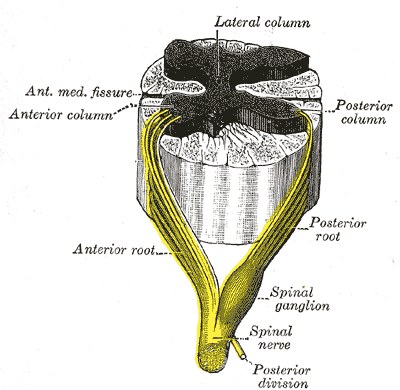
- Transmission. Primary afferent neurons carry the signal to the spinal cord. A-delta fibers (small, thin myelin) carry the first sharp pain. C fibers (small, unmyelinated) carry slower, longer-lasting dull or burning pain. Both end mainly in laminae I and II of the dorsal horn.1
- Modulation. The signal is turned up or turned down in the spinal cord. Descending systems from the brain stem release endorphin, enkephalin, dynorphin, serotonin and norepinephrine, which inhibit transmission in the spinal cord and brain.1
- Projection. The signal travels from the spinal cord to the brain stem and thalamus, then on to the cortex.1
- Perception. The brain integrates the input. This is the conscious experience of pain.1
Types of pain
| Type | What it is | Example |
|---|---|---|
| Acute | Sudden onset, can be severe, fades when the stimulus is removed. Serves as a protective warning. | Incision after a spay |
| Chronic | Lasts weeks to months and persists beyond expected healing. Serves no biological function. | Osteoarthritis, the most common cause of persistent pain in dogs, cats and horses |
| Neuropathic | Comes from injury to the central or peripheral nervous system. May come with motor, sensory or autonomic deficits. | Amputation, crush injury, diabetes mellitus |
| Inflammatory | Chemical mediators released in damaged tissue lower nociceptor thresholds (peripheral sensitization). | Surgery or extensive tissue trauma |
| Cancer | From tumor growth, metastasis or treatment. Can be acute, chronic or intermittent, with inflammatory and neuropathic parts. | Primary or metastatic tumor, chemotherapy or radiation |
Source: Merck Veterinary Manual, Pain Perception and Chronic Pain in Animals; 2022 ISFM acute pain guidelines.174
Peripheral and central sensitization
Peripheral sensitization is a drop in pain threshold after tissue damage, caused by chemical mediators in the damaged tissue. As a group these mediators are called eicosanoids. Central sensitization is a drop in threshold caused by repeated stimulation of the pain pathways. Its main sites are the dorsal horn of the spinal cord and the higher centers of the brain.4 Merck calls the combined process "wind-up". It changes the nervous system (plasticity), and the resulting pain responds poorly to standard drugs. Opioids lose efficacy, likely because opioid receptors are downregulated in the dorsal root ganglion and dorsal horn.1
Two clinical signs tell you sensitization is present:4
- Hyperalgesia: a stimulus that is normally painful feels more painful than usual.
- Allodynia: a stimulus that is normally not painful, such as a light touch, now causes pain.
Failing to recognize and treat acute pain is called oligoanalgesia. In cats it can lead to peripheral and central sensitization. In people, poor pain control after surgery can lead to persistent postoperative pain, and a similar picture may occur in cats, for example after onychectomy.4
Pre-emptive and multimodal analgesia
Pre-emptive analgesia has been defined as treatment that prevents the altered central processing that follows an injury. In practice it means giving analgesics before the surgical stimulus starts. Injecting any drug before surgery without regard to its pharmacology does not count.5 Merck says the perioperative plan should begin with an analgesic before surgery and continue through the intraoperative period. AAHA notes that pre-emptive dosing lowers intraoperative and postoperative analgesic needs.26 The 2022 ISFM guidelines use the term "preventive analgesia" and treat it, with multimodal analgesia, as one of the two principles of an analgesic plan.4
Multimodal analgesia uses drugs with different modes of action to hit different steps and neurotransmitters in the pathway, with the aim of preventing central sensitization.5 AAHA gives a typical example: an NSAID to decrease nociceptor activity, a local anesthetic to block signal transmission, and an opioid or alpha-2 agonist to decrease the response in the central nervous system. This gives more pain relief, lowers the anesthetic doses needed and lessens the impact when a drug is unavailable.6 The more extensive the tissue damage, the more drug classes are needed.2
| Step | Drug class | How it works | Technician note |
|---|---|---|---|
| Transduction | NSAIDs | Inhibit cyclooxygenase (COX), so less prostaglandin and less inflammation | Inflammation drives both peripheral and central sensitization |
| Transduction and transmission | Local anesthetics (lidocaine, bupivacaine) | Stop the signal leaving the periphery | Bupivacaine is never given IV; cats are sensitive to lidocaine |
| Transmission, modulation, perception | Opioids | Bind G protein coupled receptors in brain, spinal cord and periphery | Most effective systemic drugs for acute pain |
| Modulation | Alpha-2 agonists | Act on alpha-2A and alpha-2C receptors in the CNS | Used as premedication (pre-emptive), CRI or postoperative supplement |
| Modulation (dorsal horn) | NMDA antagonists: ketamine, amantadine | Block NMDA receptors activated by glutamate and glycine | Ketamine: good somatic, poor visceral analgesia; amantadine not effective alone |
| Modulation (dorsal horn) | Gabapentin | Binds the alpha-2-delta subunit of calcium channels | Taper the dose to avoid rebound pain; reportable controlled substance in some states |
Source: Merck Veterinary Manual, Analgesics Used in Animals; 2022 ISFM acute pain guidelines; 2020 AAHA anesthesia guidelines.346
Procedure or technique: helping build a multimodal plan
The veterinarian prescribes. The technician gathers information, prepares and gives the drugs, scores pain and reports back. A practical sequence:
- Collect the facts. Note species, the procedure or injury, expected severity, health problems (for example kidney disease) and drugs already given. The best drugs depend on expected severity, health status and drug availability for the species.2
- Give the first analgesics before the stimulus. Make sure the analgesic in the premedication is drawn up and given on time, before the incision.2
- First-line classes. ISFM describes the first step of acute pain treatment as opioids, local anesthetics and NSAIDs. Adjuvant drugs come in the second step.4
- Match drugs to pain type. Neutering pain responds to NSAIDs, opioids, alpha-2 agonists and local blocks. Orthopedic, spinal or neuropathic pain may need an NMDA antagonist such as ketamine or amantadine, or a gabapentinoid, added.4
- Add comfort care. Anxiolysis, antiemetics (maropitant, ondansetron), bandaging, cold therapy, positioning, fluids, nutrition, grooming and a quiet place away from dogs all belong in the plan.4
- Schedule doses and reassess. Scheduled doses work better than "as needed" dosing. Three to five days is a useful guide for analgesia after acute surgical pain, and aggressive treatment should be tapered rather than stopped abruptly.2
Flowchart
Species differences
- Cats and local anesthetics. Cats are sensitive to the central nervous system and cardiovascular effects of lidocaine.3 Double-check every local anesthetic dose for a cat.
- Cats and opioids. Hydromorphone causes vomiting in cats at 0.1 mg/kg SC. An FDA-approved buprenorphine product for cats gives 24 hours of analgesia.36
- Cats and ketamine. ISFM suggests an IV loading dose of 0.15 to 0.3 mg/kg, then 2 to 10 micrograms/kg/min. Cats on ketamine for days must stay in hospital with pain monitored.4
- Cats with kidney disease. An NSAID may be considered at the minimum effective dose for a normovolemic cat with stable IRIS stage I or II disease, ideally once the cat is eating and drinking after recovery.4
- Dogs. The Merck canine table lists a ketamine CRI of 0.12 to 0.6 mg/kg/h after a 0.5 to 1 mg/kg IV loading dose.3
- Horses and other species. Osteoarthritis is the most common cause of persistent pain in dogs, cats and horses, and laminitis is a common chronic pain syndrome.7
Calculation
Worked example: ketamine CRI rate. A 25 kg dog is ordered ketamine at 0.3 mg/kg/h (within the Merck canine range of 0.12 to 0.6 mg/kg/h).3 The veterinarian's protocol has the ketamine diluted to 2 mg/mL. What pump rate do you set?
Step 1, dose per hour: 25 kg x 0.3 mg/kg/h = 7.5 mg/h (kg cancels).
Step 2, volume per hour: 7.5 mg/h / 2 mg/mL = 3.75 mL/h (mg cancels).
Answer: set the syringe pump to 3.75 mL/h. Label the syringe with the drug, concentration and rate, and record the ketamine in the controlled drug log (Schedule III).3
Safety, legal and client education
- Bupivacaine is not for IV use. Systemic injection has caused severe cardiac and central nervous system toxicity, including death.3
- Ketamine is DEA Schedule III, and full mu opioids such as hydromorphone are Schedule II. Gabapentin is a reportable controlled substance in some US states.3
- Rapid IV maropitant can cause severe hypotension.3
- Using pain as a form of restraint, to stop an animal from using a surgical site, is unethical.2
- A comfortable patient after surgery often sleeps but should be easy to rouse.2
- Tell owners going home with gabapentin not to stop it suddenly, because the dose must be tapered to avoid rebound pain. Drowsiness is the usual side effect.3
- Explain that chronic pain treatment is rarely one drug and will be adjusted over time, along with weight control, moderate daily exercise and soft bedding.7
Common mistakes and exam traps
- Modulation happens in the dorsal horn of the spinal cord, not in the cortex. Perception is the cortical step.
- A-delta fibers carry the first sharp pain; C fibers carry slow, dull, burning pain. Do not swap them.
- Allodynia is pain from a normally harmless touch. Hyperalgesia is extra pain from a normally painful stimulus.
- Pre-emptive means before the surgical stimulus. A drug given just before surgery without regard to its pharmacology is not true pre-emptive analgesia.
- Wind-up pain responds poorly to opioids alone. The answer is usually to add an NMDA antagonist or another class, not just more opioid.
- Ketamine is a poor visceral analgesic. It is chosen for somatic pain and to prevent central sensitization.
Memory aids
"Tiny Turtles Make Perfect Pets" (memory aid): Transduction, Transmission, Modulation, Projection, Perception, the five processes in the Merck order.
"A-delta = A-lert, C = Crawls" (memory aid): A-delta fibers carry the fast, sharp first pain; C fibers carry the slow, dull, burning pain.
"ALL-odynia is ALL touch" (memory aid): in allodynia even a normally harmless touch hurts; hyperalgesia is a painful stimulus that hurts more than it should.
"Ketamine keeps the gate from sticking open" (memory aid): ketamine blocks NMDA receptors in the dorsal horn, preventing wind-up.
"Block it before you cut it" (memory aid): pre-emptive analgesia goes in before the surgical stimulus and lowers later analgesic needs.
Quick review
- Merck lists five processes: transduction, transmission, modulation, projection, perception.
- Transduction turns a mechanical, thermal or chemical stimulus into a nerve signal.
- A-delta fibers: thin myelin, sharp pain. C fibers: unmyelinated, dull or burning pain.
- Modulation in the dorsal horn can amplify or suppress the signal.
- Descending inhibition uses endorphin, enkephalin, dynorphin, serotonin and norepinephrine.
- Chronic pain outlasts expected healing and is a disease of altered neuroprocessing.
- Neuropathic pain comes from injury to the central or peripheral nervous system.
- Peripheral plus central sensitization is called wind-up; opioids alone work poorly against it.
- Allodynia: harmless touch hurts. Hyperalgesia: painful stimulus hurts more.
- Pre-emptive analgesia is given before the surgical stimulus.
- Multimodal plans pair an NSAID, a local anesthetic and an opioid or alpha-2 agonist, adding NMDA antagonists or gabapentinoids when needed.
- Schedule doses rather than giving them only "as needed", and taper rather than stop abruptly.