Introduction
A local anesthetic stops the pain signal at the nerve, before it ever reaches the spinal cord and brain. Opioids and other systemic drugs only change how the signal is handled once it arrives.2 That is why a well placed block can lower the inhalant a patient needs and give smooth, pain-free recovery.5
The technician calculates the maximum dose, draws up and labels the syringes, prepares the skin, often performs dental and incisional blocks under veterinary direction, and watches for toxicity. This guide covers how local anesthetics work, lidocaine and bupivacaine, safe dose limits, the four oral nerve blocks, the lumbosacral epidural, line, ring and intratesticular blocks, wound soaker catheters and the signs of toxicity.
Key facts
- Local anesthetics block sodium channels in nerves, so the nerve cannot depolarize and the pain signal is not carried.2
- Lidocaine works fast (about 1 to 2 minutes) and lasts 60 to 120 minutes. Bupivacaine starts more slowly and lasts 4 to 6 hours, possibly 6 to 8 hours in a dental foramen.2
- Recommended doses: lidocaine 4 to 6 mg/kg in dogs and 2 to 4 mg/kg in cats; bupivacaine 1 to 2 mg/kg in dogs and 1 mg/kg in cats.2
- Among local anesthetics, only lidocaine can be safely given intravenously. Never give bupivacaine IV: its cardiac toxicity can be fatal.24
- Aspirate before every injection so the drug does not go into a vessel.35
- The four oral blocks are infraorbital, caudal maxillary, middle mental and caudal mandibular (inferior alveolar).5
- The lumbosacral epidural site is a large midline space almost in line with the wings of the ilium.3
- Toxicity usually starts with muscle twitching and progresses to seizures, coma, respiratory arrest and cardiovascular collapse. Treatment for an accidental IV injection is 20% lipid emulsion IV.2
How the VTNE tests this
- Calculate a maximum safe dose in mg and convert it to mL for a given concentration (Domain 9 Task C; Domain 1 Task C).1
- Choose the block that covers a stated tooth or surgical site, or pick the correct landmark (Domain 9 Task C; K44 pain assessment and analgesic administration techniques).1
- Compare drugs: onset and duration of lidocaine versus bupivacaine, and which one must never go IV.
- Recognize toxicity in a scenario (twitching, seizures, arrhythmias) and name the first steps.
- Explain what to expect after an epidural, such as possible urinary retention and slow regrowth of clipped hair, to an owner (Domain 10 Task A).1
Core concepts
How local anesthetics work
A nerve carries a signal by letting sodium rush into the cell (depolarization). Local anesthetics primarily block those sodium channels, so no action potential forms and the pain stimulus stops at the block.2 Small pain fibers and larger motor fibers can both be blocked, which is why some blocks cause temporary weakness of a limb.
Onset and duration
Three drug properties explain the difference between lidocaine and bupivacaine:2
- pKa (the pH at which half the drug is un-ionized). Lidocaine has a pKa of 7.9, close to body pH of 7.4, so more of it crosses the nerve membrane quickly. Bupivacaine (pKa 8.1) is slower.
- Lipid solubility. Highly lipid-soluble drugs such as bupivacaine stay in the tissue longer, so they last longer. Lipid solubility also increases potency.
- Tissue pH. Infected, acidic tissue keeps more drug in the ionized form, so a block into infected tissue may be slow or weak.
A practical rule: lidocaine is the fast, short drug; bupivacaine is the slow, long drug. Some protocols mix the two to get a quick start and a long finish.4
| Drug | Onset | Duration | Dose (dog / cat) | Key caution |
|---|---|---|---|---|
| Lidocaine | About 1 to 2 min | 60 to 120 min | 4 to 6 mg/kg / 2 to 4 mg/kg | Only local anesthetic safe IV; cats more sensitive |
| Mepivacaine | 2 to 5 min | 2 to 3 h (soft tissue) | 5 to 6 mg/kg / 2 to 3 mg/kg | Used mainly for dental blocks |
| Bupivacaine | Slower than lidocaine | 4 to 6 h (6 to 8 h in a dental foramen) | 1 to 2 mg/kg / 1 mg/kg | Never IV; cardiotoxic |
| Ropivacaine | About 5 to 10 min | 4 to 6 h | 1 to 3 mg/kg / 1 to 2 mg/kg | Less cardiotoxic than bupivacaine |
| Liposomal bupivacaine (Nocita) | Fast (human data) | Up to 72 h | Label: 5.3 mg/kg (0.4 mL/kg) dog; 5.3 mg/kg per forelimb cat | Do not mix with lidocaine or water; 25 g or larger needle |
Source: Grubb and Lobprise, Part 1, Boxes 1 to 5.2 Always follow the veterinarian's order.
Adding other drugs
Buprenorphine or morphine added to lidocaine and bupivacaine has been reported to roughly double the length of the block.4 Dexmedetomidine is another additive, but it brings the alpha-2 side effects of bradycardia and hypertension.5
Procedure or technique
General steps for any block
- Confirm the order. Note the drug, concentration, dose in mg/kg and the sites to be blocked.
- Calculate the total maximum dose for the whole patient and divide it among the sites. Never exceed it.5 Use a separate labelled syringe for each drug.
- Gather supplies. 1 to 3 mL syringes; 22 to 27 gauge needles. Change needles between sites to keep them sterile and sharp.5
- Prepare the site. Use 0.05% to 0.1% chlorhexidine for intraoral blocks and 70% isopropyl alcohol for extraoral sites.5 Clip and aseptically scrub for an epidural.3
- Aspirate before injecting. Blood in the hub means the needle is in a vessel: reposition.3
- Inject slowly and stop if there is marked resistance.3
- Apply pressure over an oral injection site for about 1 minute to prevent a hematoma.5
- Monitor and record the drug, dose, sites, time and the patient's heart rate, rhythm and blood pressure.
Oral (dental) nerve blocks
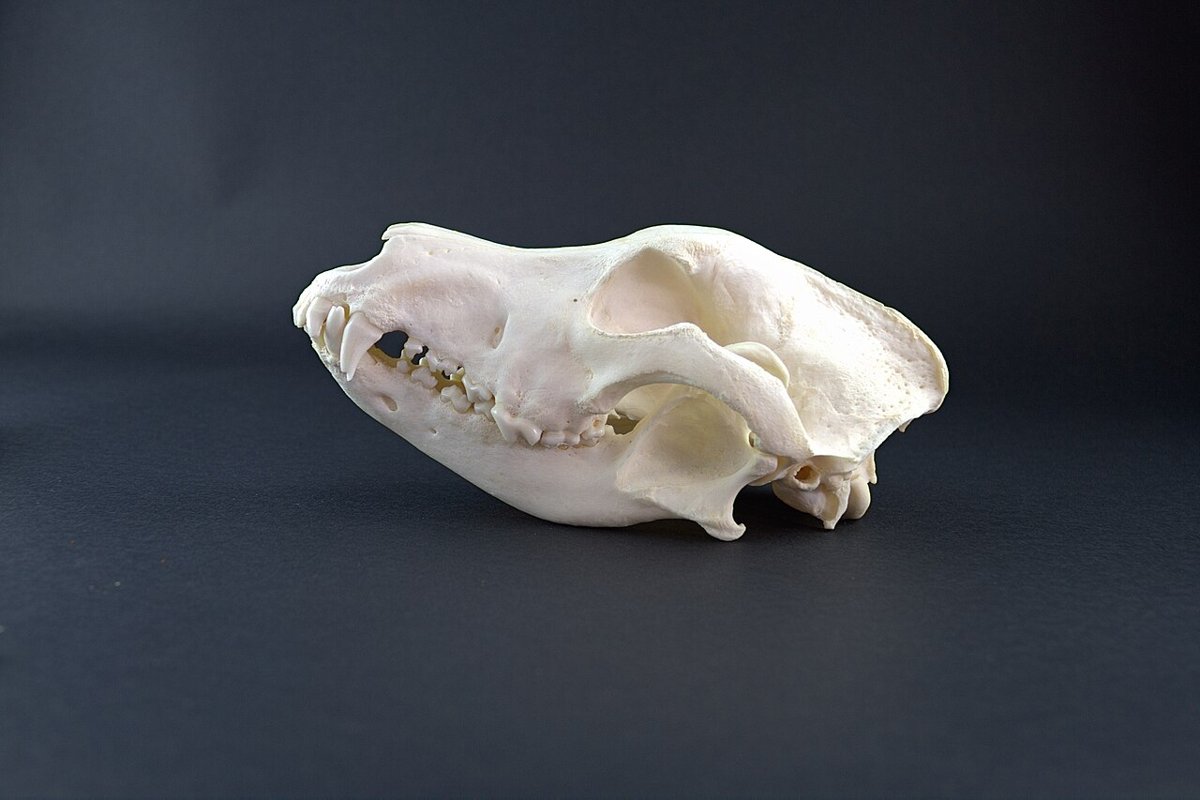
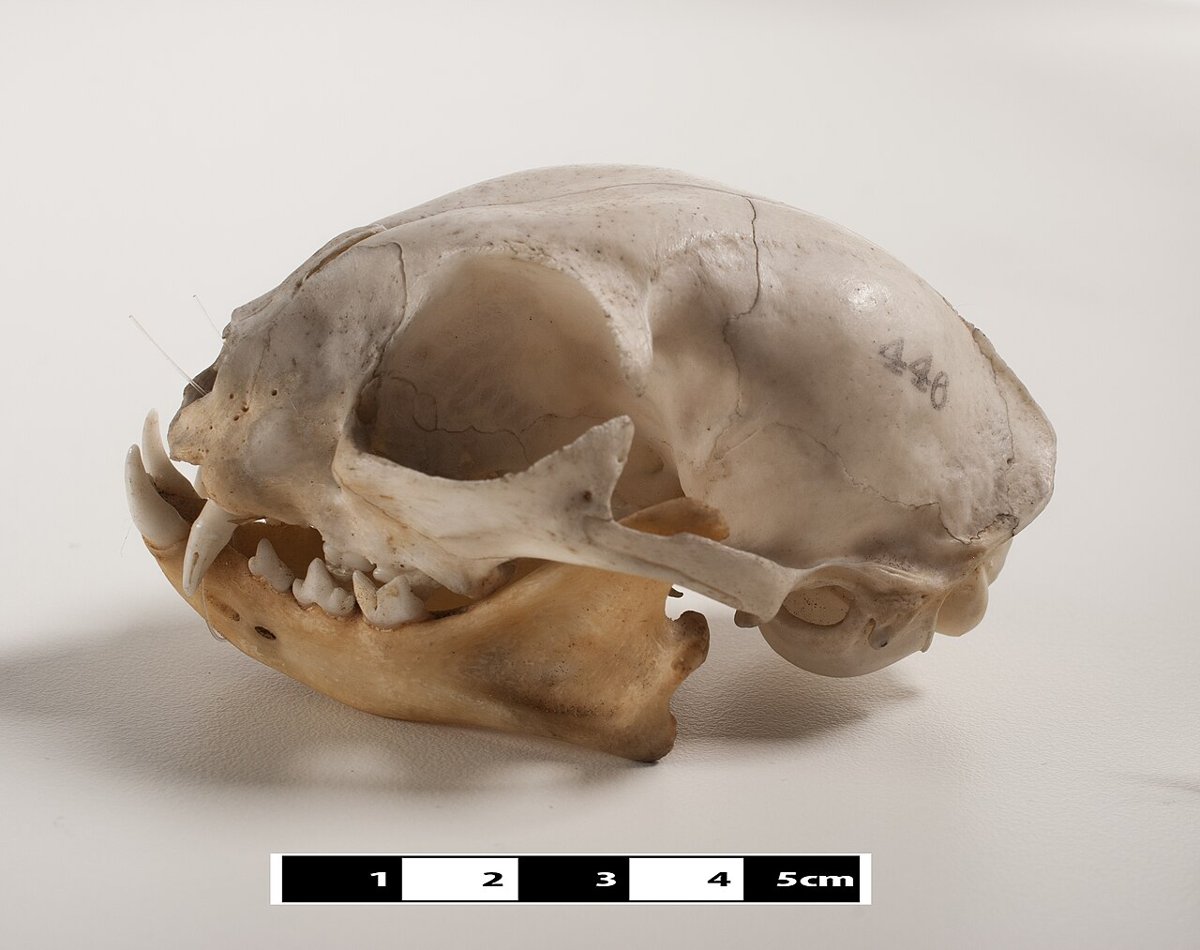
Each oral block numbs bone, teeth and soft tissue from a point forward (rostral) to the midline on one side. The needle should not go more than 3 to 5 mm into a foramen.5
| Block | Area covered | Landmark | Usual drug |
|---|---|---|---|
| Infraorbital (rostral maxillary) | Maxillary third premolar forward to midline | Infraorbital foramen, felt in the buccal mucosa dorsal to the maxillary third premolar | Bupivacaine, or lidocaine for short procedures |
| Caudal maxillary | Last molar forward to midline, including the palate | Behind the last maxillary molar (teeth 110 and 210), at the maxillary tuberosity | Bupivacaine |
| Middle mental (rostral mandibular) | Mandibular second to third premolar forward to midline | Middle mental foramen, ventral to the mesial root of the second premolar | Bupivacaine |
| Caudal mandibular (inferior alveolar) | Mandibular third molar forward to midline | Mandibular foramen, on the lingual side just rostral to the angular process | Bupivacaine |
| Line (incisional) block | Skin and tissue along an incision | Inject along the incision or wound field | Lidocaine and/or bupivacaine |
| Ring block | Distal limb or digit | Subcutaneous ring around the limb or digit | Lidocaine and bupivacaine, no epinephrine |
| Intratesticular | Testis and spermatic cord for castration | Needle through the testicle toward the spermatic cord | Lidocaine, bupivacaine or ropivacaine |
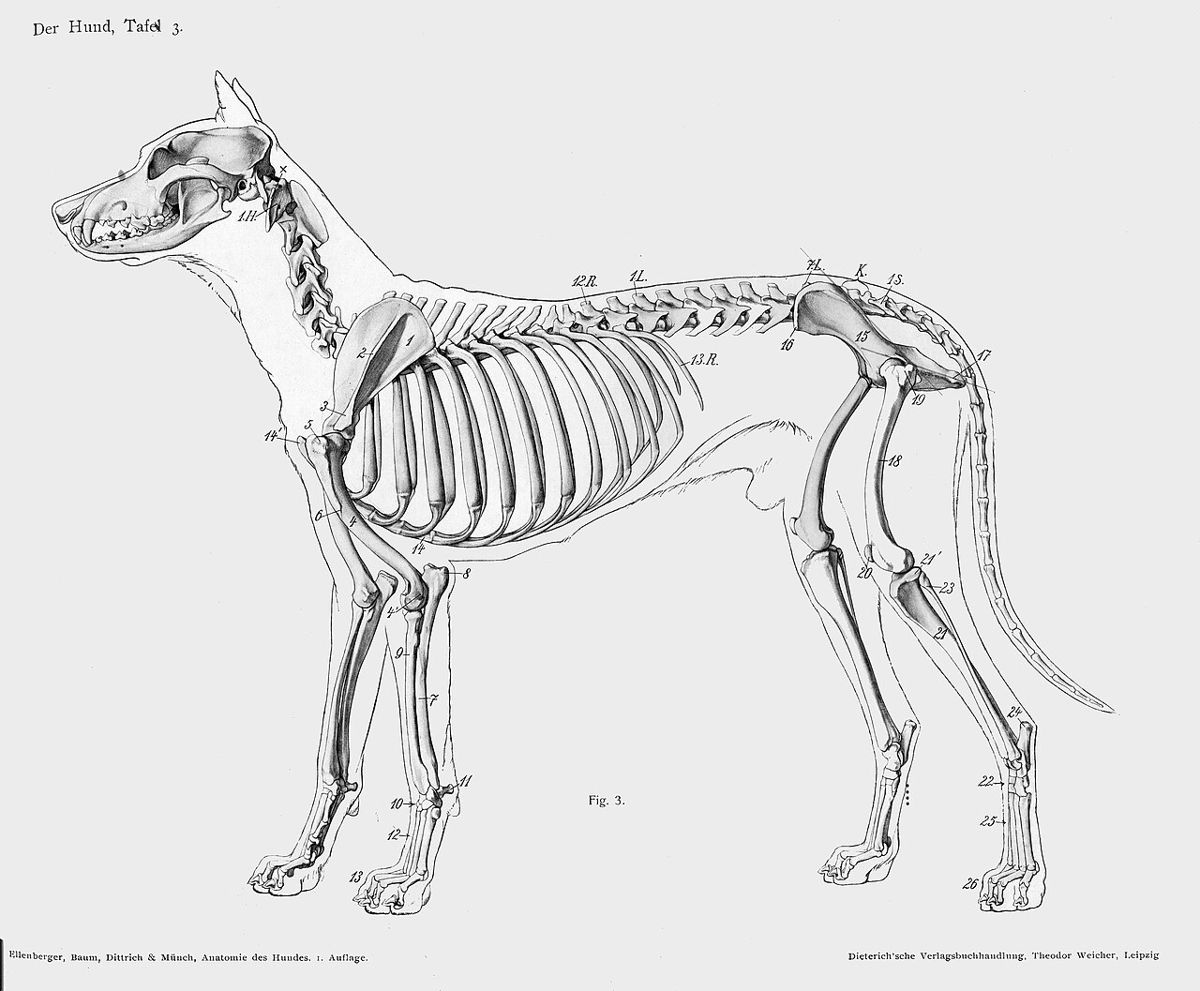
| Lumbosacral epidural | Hind limbs, pelvis, tail, perineum | L7 to sacrum midline space, in line with the iliac wings | Preservative-free morphine with or without bupivacaine |
Sources: Davis, Today's Veterinary Nurse 20255; Grubb and Lobprise, Part 23; VASG.4
Lumbosacral epidural
- Position the patient in sternal or lateral recumbency. Pulling the hind legs forward opens the space.3
- Clip and aseptically scrub the site; the veterinarian wears gloves and uses a small drape.3
- The needle (often a Tuohy epidural or spinal needle) enters the caudal part of the space at about 45 degrees from vertical.3
- Entry into the epidural space may be confirmed by the hanging drop (fluid in the hub is drawn in), by one or more "pops", and by little or no resistance to injection.3
- A common drug is preservative-free morphine at 0.1 mg/kg, often with bupivacaine.3
Contraindications include bleeding disorders and skin disease over the site. Urinary retention can occur but is uncommon; check and express the bladder. Clipped hair at the site may regrow slowly; this is because lumbosacral hair regrows slowly after clipping, not an effect of the drug.3
Line, ring and intratesticular blocks
- Line (incisional or field) block: drug is injected around or into the incision. Saline can be added to increase volume, but the mg dose limit still applies. Local anesthetics in an incision do not cause a clinical delay in healing.3
- Ring block: drug is injected under the skin all the way around the limb, for example across the whole dorsum and ventrum of the paw.3 Do not use products that contain epinephrine.4
- Intratesticular block: the needle goes into the body of the testicle aimed at the spermatic cord. Aspirate, then inject until the testicle feels firm, about half the dose per side. Expect 0.2 to 2.0 mL per testicle depending on size. The testicle may look bruised, which does not matter because it is removed.3 Left-over drug can be used for the skin incision.4
Wound soaker catheters
A wound soaker catheter (WSC) is a fenestrated tube placed in the incision, most often between the subcutaneous tissue and fascia along the whole wound, so local anesthetic can be infused after surgery.6 The catheter is a possible route for surgical site infection, so handle the port aseptically. If the patient goes home with it, the owner must be taught how to give the drug and care for it.6
Species differences
- Cats are more sensitive than dogs to lidocaine and bupivacaine. Lidocaine can cause CNS excitation and convulsions; bupivacaine overdose can cause seizures, respiratory depression and cardiac arrest.5 Cat doses are lower (bupivacaine 1 mg/kg).2 The tiny amount of lidocaine sprayed on the larynx for intubation does not need to be counted in the total dose.2
- Cat convulsant doses (IV, research data): lidocaine about 11.7 mg/kg, bupivacaine about 3.8 mg/kg. Bupivacaine has the narrower margin.2
- Dental block volume: about 0.2 to 0.25 mL per site in cats; 0.25, 0.5 or 1 mL per site in small, medium and large dogs.3
- Spinal cord end: at the cranial border of L7 in large dogs, and at the lumbosacral junction in small dogs and cats. During an epidural, CSF aspirated into the hub means the needle has passed through the dura.3
- Methemoglobinemia (oxidized hemoglobin that cannot carry oxygen) is rare and mainly linked to benzocaine in cats.2
Calculation
Worked example. A 4 kg cat needs four dental blocks with bupivacaine 0.5% at 1 mg/kg total.
- Total dose: 4 kg × 1 mg/kg = 4 mg (kg cancels).
- Concentration: 0.5% = 5 mg/mL.
- Total volume: 4 mg ÷ 5 mg/mL = 0.8 mL (mg cancels).
- Per site: 0.8 mL ÷ 4 sites = 0.2 mL per site.
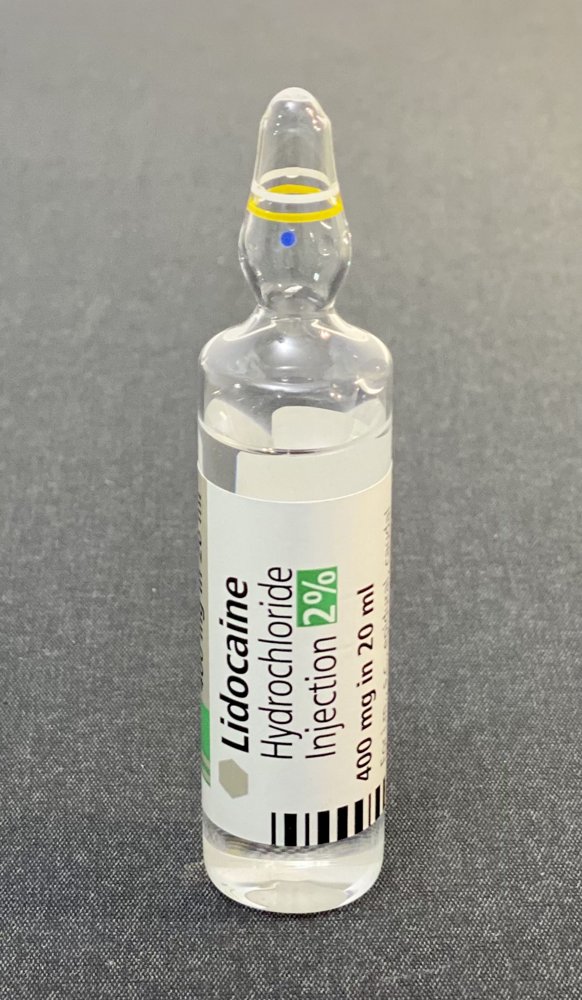
This is the same three-step method Davis describes (weight × dose, ÷ concentration, ÷ number of quadrants).5 Percent to mg/mL: multiply the percent by 10. So 2% lidocaine is 20 mg/mL and 1% is 10 mg/mL.7
Safety, legal and client education
Toxicity signs
With lidocaine and most local anesthetics, signs follow a gradation: muscle twitching and fasciculations first, then seizures, unconsciousness, coma, respiratory arrest and cardiovascular collapse. With bupivacaine, cardiac signs can appear at the same time as CNS signs.2
If toxicity is suspected: stop injecting, alert the veterinarian, support breathing and circulation, and have 20% lipid emulsion ready. The lipid is thought to act as a "sink" that pulls the drug away from tissues.2
Other safety points
- Use lidocaine in restricted quantities where blood supply is limited to end arteries, such as digits, ear, nose or penis.7
- Do not inject liposomal bupivacaine through a needle smaller than 25 gauge, and do not mix it with lidocaine. A broached vial is not guaranteed sterile beyond 4 hours.2
- Signs of eye injury after a maxillary block include proptosis, sudden blindness and severe uveitis.5
Client education
- After a dental block, the lip or tongue may stay numb for some hours. Watch that the patient does not chew it.
- After an epidural, the owner should report straining to urinate or no urination. Clipped hair over the lower back may grow back slowly.3
- For a soaker catheter at home, teach the dose, aseptic handling of the port and signs of infection at the incision.6
Common mistakes and exam traps
- Thinking bupivacaine works faster than lidocaine. It is slower to start but lasts longer.2
- Giving any local anesthetic other than lidocaine IV. Bupivacaine IV can cause fatal cardiac toxicity.4
- Calculating the dose per site instead of per patient. The mg/kg limit is the total for all sites combined.5
- Mixing up percent and mg/mL. A 0.5% solution is 5 mg/mL, not 0.5 mg/mL.
- Using the dog dose for a cat. Cats get lower doses and show toxicity sooner.5
- Skipping aspiration because the block is "only" intratesticular. The testicle is very vascular.3
Memory aids
Lido is Lightning, Bupi is Bedtime (memory aid): lidocaine starts in about 1 to 2 minutes and lasts 1 to 2 hours; bupivacaine starts slower and lasts 4 to 6 hours.
B for Blood vessel: never (memory aid): bupivacaine is never given IV because of its cardiac toxicity; only lidocaine is safe IV.
Times 10 (memory aid): percent × 10 = mg/mL, so 0.5% bupivacaine is 5 mg/mL and 2% lidocaine is 20 mg/mL.
Twitch, Fit, Flat (memory aid): the order of toxicity signs: muscle twitching, then seizures, then respiratory and cardiovascular collapse.
Wings point to the space (memory aid): the lumbosacral epidural site lies on the midline almost level with the wings of the ilium.
Quick review
- Local anesthetics block nerve sodium channels.
- Lidocaine: onset about 1 to 2 minutes, duration 60 to 120 minutes.
- Bupivacaine: slower onset, duration 4 to 6 hours.
- Only lidocaine may be given IV; never bupivacaine.
- Bupivacaine dose: 1 to 2 mg/kg dog, 1 mg/kg cat, total for all sites.
- Aspirate before every injection.
- Infraorbital foramen: dorsal to the maxillary third premolar.
- Middle mental foramen: ventral to the mesial root of the mandibular second premolar.
- Lumbosacral epidural: midline L7 to sacrum, in line with the iliac wings; morphine 0.1 mg/kg preservative-free.
- After an epidural: urinary retention is uncommon; clipped lumbosacral hair regrows slowly (a clipping effect, not a drug effect).
- Toxicity: twitching, seizures, coma, cardiovascular collapse; treat with 20% lipid emulsion.
- Cats are more sensitive than dogs; use lower doses.