Introduction
Opioids are the backbone of acute and perioperative pain control in dogs and cats. They act on receptors in the brain, spinal cord and peripheral nerves and give reliable, consistent analgesia, but they are not free of adverse effects.2 The technician draws them up, gives them, watches the patient for side effects, keeps the reversal agent close and records every milligram in the controlled drug log.
This guide covers the opioid receptors, the three working classes of opioid (full agonists, partial agonists and agonist-antagonists), routes including oral transmucosal buprenorphine in cats, the common adverse effects, naloxone reversal and the DEA schedule of each drug.
Key facts
- Opioids produce analgesia mainly by activating mu and kappa opioid receptors.2
- Full mu agonists (morphine, hydromorphone, methadone, fentanyl) give better analgesia for moderate to severe pain than buprenorphine or butorphanol.2
- Butorphanol is a mu antagonist and kappa agonist. In cats its analgesia lasts 1 to 2 hours and it is not adequate as the only analgesic for routine surgery.3
- Buprenorphine is a partial mu agonist. In cats the standard 0.3 mg/mL product lasts up to 8 hours by IV, IM or oral transmucosal (OTM) route; the 1.8 mg/mL product (Simbadol) is given SC at 0.24 mg/kg once daily for up to 3 days.34
- Hydromorphone and morphine cause vomiting in 50 to 75% of dogs and cats; methadone causes little vomiting.2
- Naloxone is the opioid antagonist. Its action may be shorter than the opioid it reverses, so the patient must be watched for return of sedation and respiratory depression.6
- DEA schedules: morphine, hydromorphone, oxymorphone, methadone and fentanyl are Schedule II; buprenorphine is Schedule III; butorphanol is Schedule IV.789
How the VTNE tests this
Opioids sit in the Pain Management domain. The VTNE outline lists knowledge of "pain assessment and analgesic administration techniques" (K44) and of medication "reactions, indications, contraindications, side effects, and interactions" (K43).1 Expect questions that ask you to classify a named drug (full agonist, partial agonist or agonist-antagonist), to pick the best opioid for a scenario, to recognize an adverse effect such as vomiting or feline hyperthermia, to explain why naloxone may need repeating, and to name a drug's DEA schedule. A drug volume calculation may also appear.
Core concepts
Receptors
A receptor is a protein on a nerve cell that a drug binds to. Opioid analgesia comes mainly from the mu receptor, with a smaller contribution from the kappa receptor.2 Mu agonists give the strongest pain relief, and also the main side effects, especially reduced breathing drive and vomiting.2
Agonist, partial agonist, agonist-antagonist, antagonist
An agonist binds a receptor and activates it. A full agonist produces the maximum response. A partial agonist binds but produces less than the maximum response; buprenorphine is the classic example, a partial mu agonist compared with morphine, a full mu agonist.5 An agonist-antagonist activates one receptor while blocking another: butorphanol blocks mu and activates kappa.3 An antagonist binds and blocks without activating; naloxone is the mu antagonist used for reversal.3
The drugs you will handle
| Drug | Class | Duration (cat, ISFM) | DEA schedule | Technician notes |
|---|---|---|---|---|
| Morphine | Full mu agonist | Up to 6 h IV or IM; 12 to 24 h epidural | II | Give slowly IV (histamine release). Vomiting common. Urinary retention possible after epidural. |
| Hydromorphone | Full mu agonist | Up to 6 h IV or IM | II | Vomiting and nausea common, especially IM or SC. High doses linked to feline hyperthermia. |
| Methadone | Full mu agonist, also NMDA antagonist | Up to 6 h | II | Minimal vomiting compared with hydromorphone and morphine. IV, IM or OTM in cats. |
| Fentanyl | Full mu agonist | Only while the infusion runs | II | Short acting, best as a CRI. Higher doses may cause bradycardia. Patch absorption in cats is highly variable. |
| Buprenorphine 0.3 mg/mL | Partial mu agonist | Up to 8 h IV, IM or OTM | III | SC use of this strength is not recommended in cats. No vomiting or histamine release. |
| Buprenorphine 1.8 mg/mL (Simbadol) | Partial mu agonist | Up to 24 h SC | III | FDA-approved for cats. Do not confuse with the 0.3 mg/mL product. |
| Butorphanol | Mu antagonist, kappa agonist | 1 to 2 h | IV | Mild pain and sedation for procedures. Higher doses do not add analgesia (ceiling effect). |
| Naloxone | Mu antagonist (reversal) | Not applicable | Not controlled | Dilute and give slowly to effect. May need repeating. |
Sources: Steagall and colleagues, 2022 ISFM acute pain guidelines, Table 6;3 Merck Veterinary Manual opioid table;10 21 CFR 1308.12 to 1308.14.789
Adverse effects
- Vomiting and nausea. Parenteral hydromorphone and morphine consistently cause vomiting and nausea signs such as hypersalivation and lip-licking. Vomiting raises intracranial pressure and risks aspiration, so these drugs are used with caution in patients with raised intracranial pressure or esophageal disease. Maropitant given 45 to 120 minutes before the opioid reduces emesis.2
- Respiratory depression. Reduced central breathing drive is a key side effect. It becomes clinically significant when opioids are combined with other drugs such as high-dose alpha-2 agonists or anesthetics, so ventilation must be monitored closely.2
- Panting in dogs. Healthy dogs often pant after methadone, hydromorphone or oxymorphone.2
- Bradycardia. Higher fentanyl doses may cause bradycardia.10
- Dysphoria and excitement in cats. These were mostly the result of doses above current recommendations. At correct doses cats more often show mild sedation, or kneading, rolling and purring.2
- Mydriasis in cats. Dilated pupils are expected at effective opioid doses in cats.3
- Feline hyperthermia. Temperatures as high as 41.1 to 42.2 °C (106 to 108 °F) have been recorded in cats after anesthesia or sedation. Hydromorphone was the first drug linked to it, but other opioids and ketamine can do it too. This is not a reason to withhold opioids.11
| Effect | Most linked to | Technician action |
|---|---|---|
| Vomiting, drooling, lip-licking | Hydromorphone, morphine (dogs and cats) | Watch the airway; report before giving to patients with raised intracranial pressure or esophageal disease |
| Slow or shallow breathing | Full agonists combined with sedatives or anesthetics | Monitor RR, SpO2 and ETCO2; have oxygen and naloxone ready |
| Panting | Methadone, hydromorphone, oxymorphone (dogs) | Record it; it is expected in a pain-free dog |
| Bradycardia | Higher fentanyl doses | Report a falling heart rate to the veterinarian |
| Mydriasis, purring, kneading | Effective opioid doses (cats) | Record as an expected effect |
| Hyperthermia | Hydromorphone and other opioids, ketamine (cats) | Keep taking temperatures after recovery |
Sources: Kerr 2023;2 ISFM 2022;3 Merck opioid table;10 AAFP 2018.11
Procedure or technique
Giving an opioid and monitoring
- Confirm the drug, the concentration on the vial and the dose with the veterinarian's order. Check the concentration twice for buprenorphine, which comes in 0.3 mg/mL and 1.8 mg/mL strengths.13
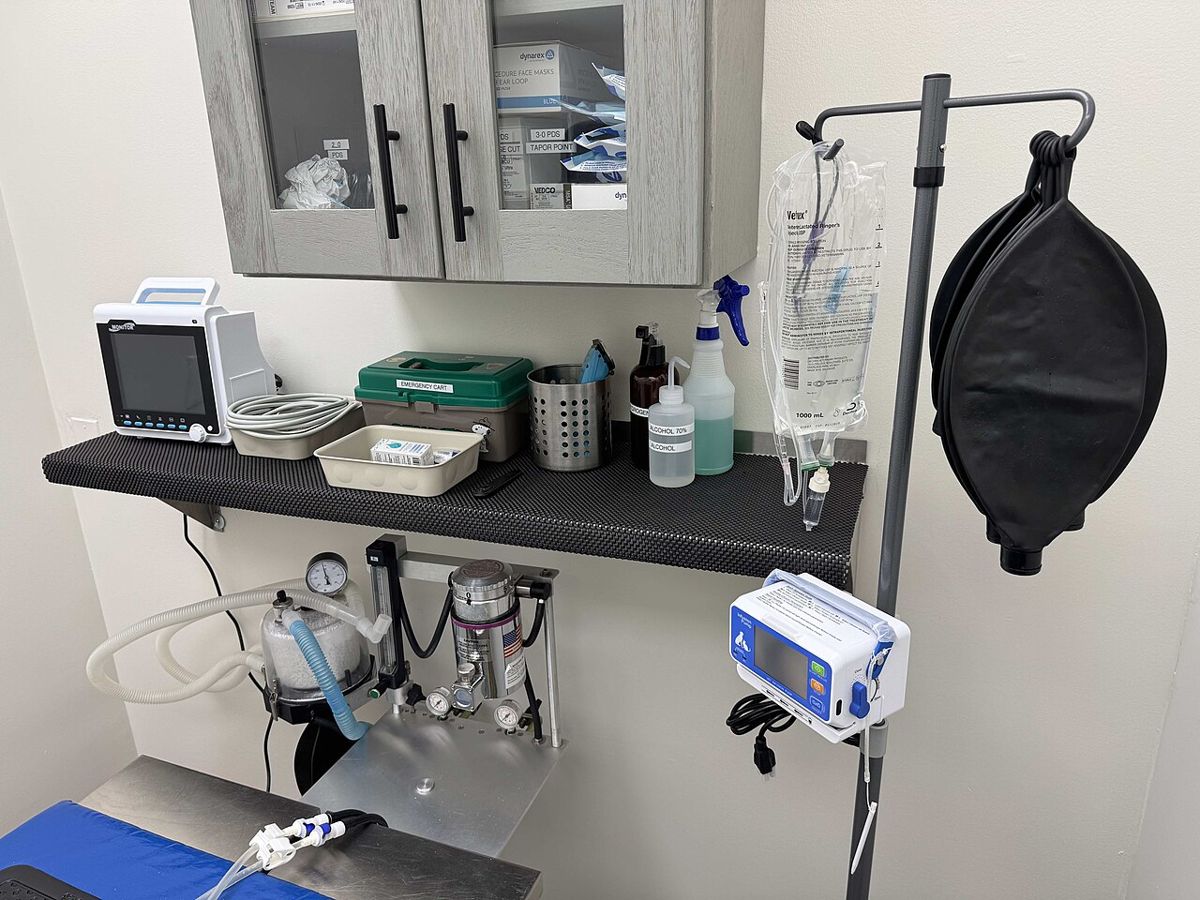
- Have naloxone, oxygen and intubation supplies ready before giving a full mu agonist.
- Give morphine slowly if given IV, because rapid IV injection can release histamine.10
- Expect and record vomiting, panting, sedation and, in cats, dilated pupils. Record heart rate, respiratory rate and temperature on the treatment sheet.
- In cats given hydromorphone or other opioids around anesthesia, keep taking temperatures after recovery. Postoperative temperature monitoring prevents both hypothermia and hyperthermia.11
- Re-score pain at the time the drug should be working, and record the dose in the controlled substance log.
Oral transmucosal buprenorphine in cats
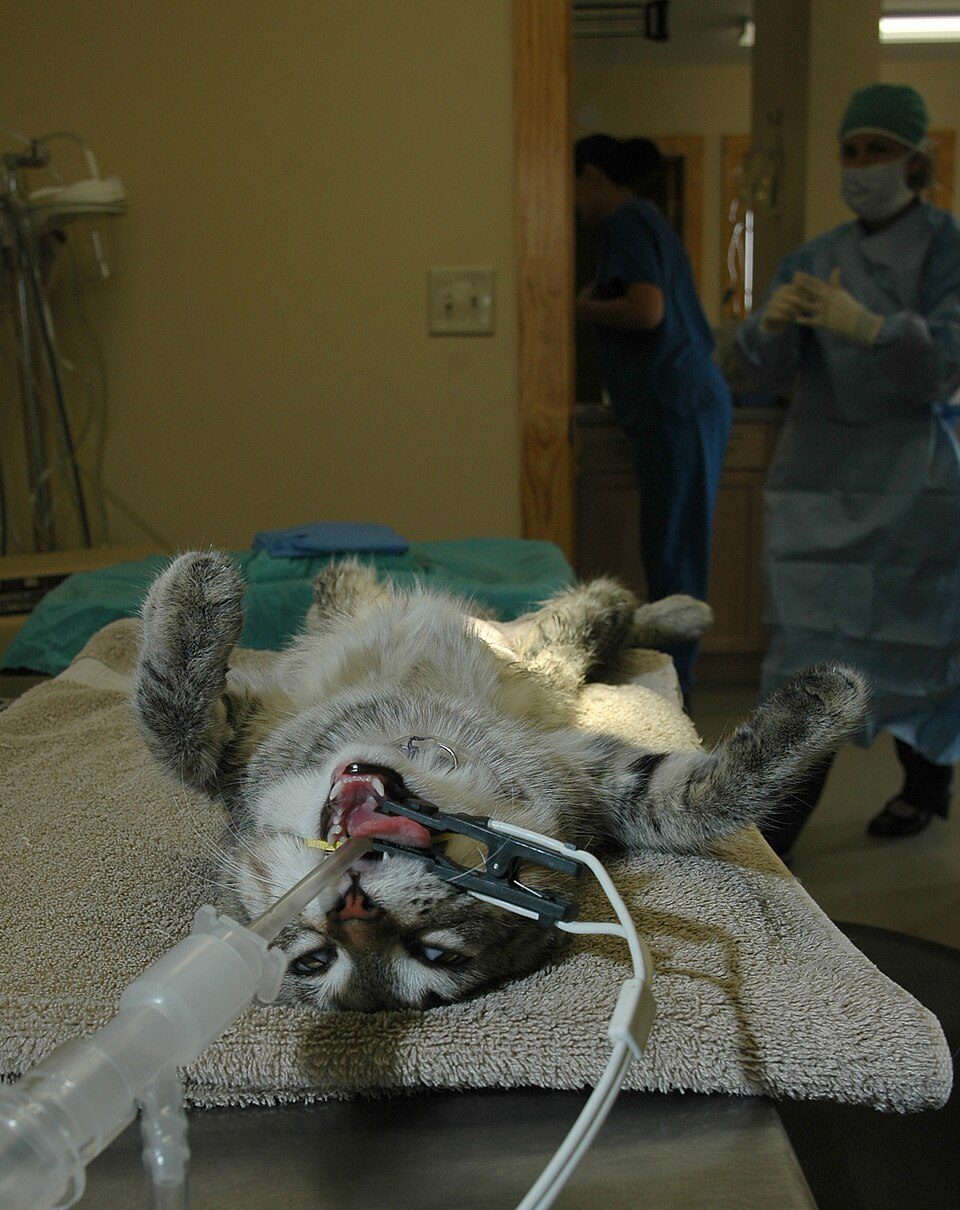
Oral transmucosal (OTM) means the drug is placed in the mouth and absorbed through the oral lining rather than swallowed. OTM buprenorphine bypasses first-pass liver metabolism, so it reaches higher bioavailability than swallowed drug. It is a non-invasive, "hands-off" option, but analgesia can vary, so IV or IM is preferred for acute postoperative pain when possible.3 Buprenorphine has a slow onset: plasma levels do not match analgesia, so do not expect pain relief the moment it is given.12
Fentanyl patches
Transdermal fentanyl patches in cats give highly variable plasma levels, and analgesia may be suboptimal. The patch is applied 18 to 24 hours before the painful event.3 Patches cannot be cut.10
Flowchart: suspected opioid overdose
Naloxone in practice
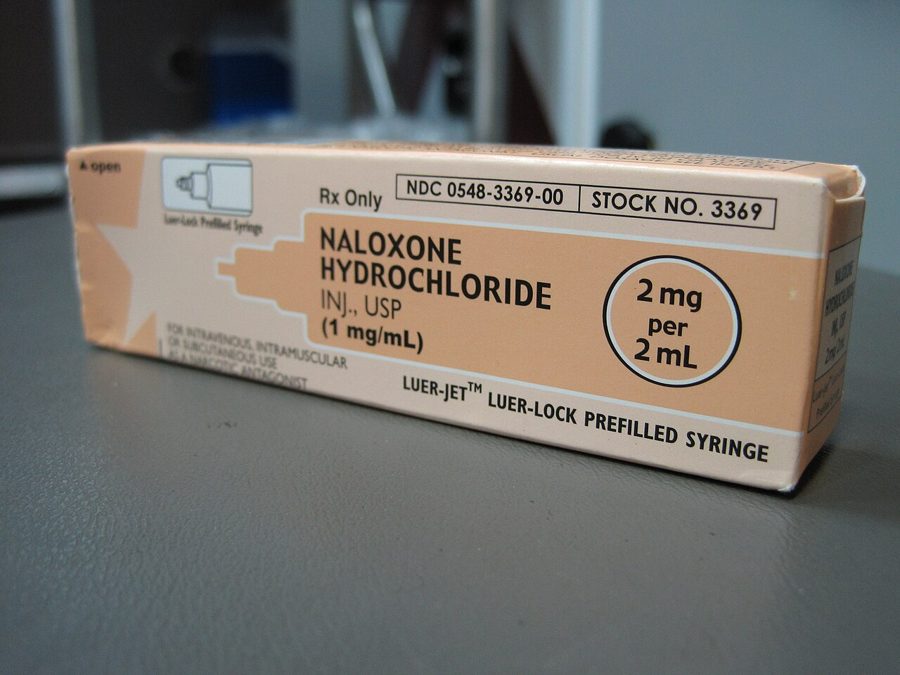
Given IV, naloxone usually acts within 2 minutes; IM gives a longer effect than IV. Because naloxone may be shorter acting than some opioids, sedation and respiratory depression can return, and repeat doses may be needed. Naloxone does not reverse respiratory depression caused by non-opioid drugs.6 The ISFM guidelines advise diluting naloxone (0.01 to 0.04 mg/kg) to 5 mL and giving it slowly to effect in cats.3 Reversal removes analgesia as well as side effects. Butorphanol (0.02 to 0.05 mg/kg IV) can partly reverse a full agonist while keeping some pain relief.3 The Simbadol label, in its section on accidental human exposure, warns that naloxone may not be effective in reversing respiratory depression produced by buprenorphine and that its onset may be delayed by 30 minutes or more.4
Species differences
- Cats. At currently recommended doses, excitement is uncommon in cats. Expect mydriasis, purring, kneading and euphoria.3 Watch for post-anesthetic hyperthermia, which may be worse in cats that were coldest at the end of anesthesia.11 Buprenorphine can be given by the OTM route, although analgesia by this route can vary.3
- Dogs. Expect panting after hydromorphone, oxymorphone or methadone.2 Butorphanol's effect lasts only 1 to 2 hours in most dogs.10
- Both. Hydromorphone and morphine cause a high rate of vomiting (50 to 75%) in dogs and cats.2
Calculation
Worked example: two buprenorphine strengths. A 4 kg cat is ordered buprenorphine.
Order A: 0.02 mg/kg of the 0.3 mg/mL product. Dose = 4 kg x 0.02 mg/kg = 0.08 mg. Volume = 0.08 mg / 0.3 mg/mL = 0.27 mL.
Order B: 0.24 mg/kg SC of the 1.8 mg/mL product. Dose = 4 kg x 0.24 mg/kg = 0.96 mg. Volume = 0.96 mg / 1.8 mg/mL = 0.53 mL.
Both doses fall within published ranges.34 Notice that 0.53 mL of the 1.8 mg/mL product holds 12 times the drug of 0.27 mL of the 0.3 mg/mL product. Reading the wrong vial is a real overdose risk.13
Safety, legal and client education
Every opioid in this guide except naloxone is a DEA controlled substance. Schedule II drugs (morphine, hydromorphone, oxymorphone, methadone, fentanyl) carry the tightest controls; buprenorphine is Schedule III and butorphanol Schedule IV.789 Naloxone is specifically excluded from the Schedule II opiate listing.7 Log every dose given and every amount wasted with a witness, and keep stock locked. The controlled substances guide (D1) covers ordering, logs and disposal in detail.
When an owner takes home a cat on buprenorphine or a dog with a fentanyl patch, explain what to watch for: excessive sedation, slow breathing, and signs that pain has returned. Explain that a cat may have big pupils, purr and knead after an opioid and that this is expected.
Common mistakes and exam traps
- Calling butorphanol a strong analgesic. It is a mu antagonist and kappa agonist, short acting, with a ceiling effect, and it is not enough alone for routine surgery.3
- Thinking one dose of naloxone ends the problem. Naloxone can wear off before the opioid, so watch and be ready to repeat.6
- Assuming naloxone reverses everything. It does not reverse respiratory depression from non-opioid drugs.6
- Mixing up buprenorphine strengths: 0.3 mg/mL and 1.8 mg/mL.13
- Giving the 0.3 mg/mL buprenorphine SC to a cat. ISFM does not recommend this route for that strength.3
- Expecting buprenorphine to work instantly. Its onset is slow.12
- Withholding opioids from a cat for fear of hyperthermia or "morphine mania". Excitement mostly followed doses above current recommendations, and hyperthermia is not a reason to withhold opioids; monitor temperature instead.211
- Putting buprenorphine in Schedule II. It is Schedule III.8
Memory aids
"Mu is the Most": the mu receptor gives the most pain relief and the most side effects (memory aid).
BUTOR = "But only a little": butorphanol gives mild, short (1 to 2 h) analgesia with a ceiling (memory aid).
"Bup is Partial and Patient": buprenorphine is a partial agonist with a slow onset, so be patient before re-scoring (memory aid).
"2, 3, 4": full agonists Schedule II, buprenorphine III, butorphanol IV (memory aid).
"Naloxone Leaves Early": naloxone may wear off before the opioid, so watch for re-sedation (memory aid).
Quick review
- Opioid analgesia comes mainly from mu and kappa receptors.
- Full mu agonists: morphine, hydromorphone, methadone, fentanyl. Strongest analgesia, Schedule II.
- Buprenorphine: partial mu agonist, Schedule III, slow onset, works OTM in cats.
- Butorphanol: mu antagonist and kappa agonist, Schedule IV, 1 to 2 hours, ceiling effect.
- Hydromorphone and morphine cause vomiting in 50 to 75% of dogs and cats; methadone rarely does.
- Cats: expect mydriasis and euphoria; monitor temperature for opioid-related hyperthermia.
- Naloxone reverses opioids, removes analgesia too, and may need repeating.