Introduction
Induction is the moment a sedated patient becomes unconscious. Intubation is placing an endotracheal tube (ETT), a flexible tube that runs from the mouth into the trachea, so the airway stays open and protected. The 2020 AAHA guidelines say a patent airway should be secured with an ETT or a supraglottic device as soon after induction as possible.1
On most teams the credentialed technician draws up the induction drug, gives it to effect under the veterinarian's direction, intubates, confirms the tube, inflates the cuff and ties the tube in. This guide covers the common induction agents, how to choose and measure a tube, cuff inflation, how to prove the tube is in the trachea, the feline larynx and brachycephalic patients.
Key facts
- Induction drugs are always dosed "to effect". Premedicated, sick or depressed patients usually need less.1
- Apnea and respiratory depression are the most common adverse effects of propofol and are dose dependent.3 All induction drugs can depress breathing, so preoxygenate.2
- Choose the largest ETT that passes easily between the arytenoid cartilages without trauma.1 Most adult cats need a 3.5 to 5.0 mm internal diameter tube.2
- Measure the tube against the patient first. The tip should not pass the thoracic inlet (point of the shoulder).12
- Correct placement is confirmed by seeing the tube between the arytenoids, bag movement, condensation in the tube on exhalation and a definite end-tidal CO2 (EtCO2) tracing.1
- AAHA: give a manual breath to 15 to 20 cm H2O and inflate the cuff slowly until the leak sound stops. Overinflation can damage the trachea.1
- Cats: drop no more than 0.2 mL of 2% lidocaine (without epinephrine) on the arytenoids and wait 60 to 90 seconds before intubating.2
- Brachycephalic breeds have higher rates of airway-related anesthetic complications than other breeds.1
How the VTNE tests this
- Choose the airway step: select a tube, measure it, inflate the cuff, confirm placement. Domain 7 Task E, "Establish and maintain a patent airway using endotracheal intubation".11
- Recognize drug effects: apnea after propofol, high jaw tone and central eyes after ketamine, myoclonus with etomidate. K43, "Pre-anesthetic and anesthetic medications reactions, indications, contraindications, side effects, and interactions".11
- Troubleshoot: laryngospasm in a cat, a tube in the esophagus, a leak around the cuff. K42 covers "Anesthetic induction, maintenance, monitoring, and recovery including stages of anesthesia and troubleshooting".11
- Calculate an induction dose and volume in mg/kg and mL.
- Species and breed: cats, brachycephalic dogs, rabbits and horses.
Core concepts
Induction agents
Propofol is a short-acting injectable anesthetic that acts on GABA receptors. It gives brief anesthesia with a rapid, smooth recovery. It can cause apnea, respiratory depression and vasodilation with hypotension. Paddling, tremors and muscle rigidity can occur and may be mistaken for seizures.3 It is a poor analgesic, and a single dose lasts about 10 minutes.4 Veterinary propofol is a white emulsion at 10 mg/mL. An opened vial of a product with benzyl alcohol preservative (PropoFlo 28) must be used within 28 days.12
Alfaxalone is a synthetic neuroactive steroid that also acts on GABA receptors. It gives no analgesia. It can be given IV as a bolus or infusion, and IM, though IM injection has been linked to pain and to excitement and hyperreactivity in recovery. It can depress breathing and lower blood pressure.3 Alfaxan Multidose is 10 mg/mL and is a Schedule IV controlled drug (CIV).13
Ketamine is a dissociative drug usually paired with a benzodiazepine (midazolam or diazepam). Expect strong palpebral reflexes, increased muscle and jaw tone, central eyes and an apneustic breathing pattern (breath-holding between quick breaths). Unlike most anesthetics, it does not slow the heart; most animals show tachycardia and higher blood pressure. It can raise intracranial and intraocular pressure.4
Etomidate changes heart rate, rhythm and blood pressure very little, so it suits patients with cardiovascular disease. Give it after premedication and with a benzodiazepine, because myoclonus (muscle jerks) and pain on injection are common. It can depress adrenal cortical function.4 It has high osmolality and contains propylene glycol, so dilute it or inject it with fluids running.2
| Agent | Cat dose (mg/kg) and route | What to expect | Technician notes |
|---|---|---|---|
| Propofol | 4 to 8, IV only | Rapid onset, short action; apnea and hypotension | Give slowly to effect; preoxygenate; no analgesia |
| Alfaxalone | 1 to 4, IV or IM | Respiratory depression; possible rough IM recovery | CIV log entry; IM volume may need two sites |
| Ketamine + midazolam | 2 to 5 + 0.2 to 0.3, IV, IM or SC | Jaw tone stays, eyes central, heart rate rises | Stings IM or SC; do not judge depth by eye position |
| Etomidate | 1.5 to 4, IV | Stable heart rate and blood pressure; myoclonus | Premedicate; give with a benzodiazepine; irritant to veins |
Source: AAFP feline anesthesia guidelines Table 9 (doses, routes, sting and dilution notes); Merck Veterinary Manual; Nugent-Deal, dvm360. Doses may be much lower after premedication.234
The tube and the larynx
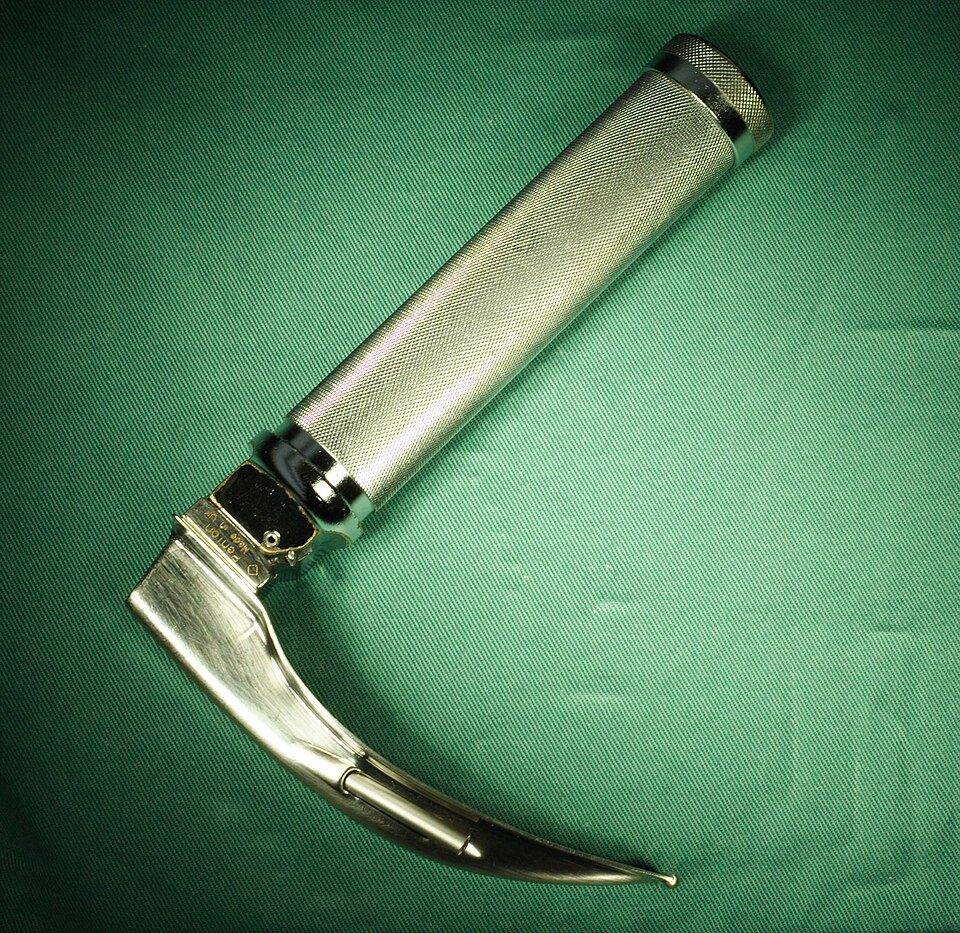
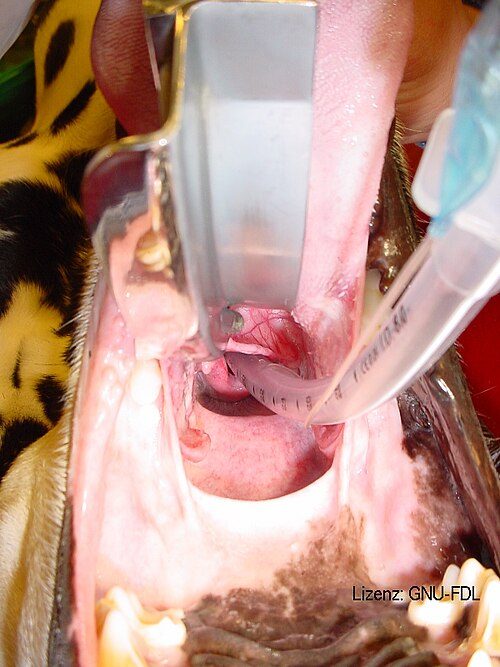
The larynx is the gateway to the trachea. The two arytenoid cartilages and the vocal folds form the glottis, the opening you pass the tube through. A laryngoscope (a handle with a lighted blade) lets you see it without trauma. The AAFP lists Miller blades in sizes 0 to 2 for cats.2
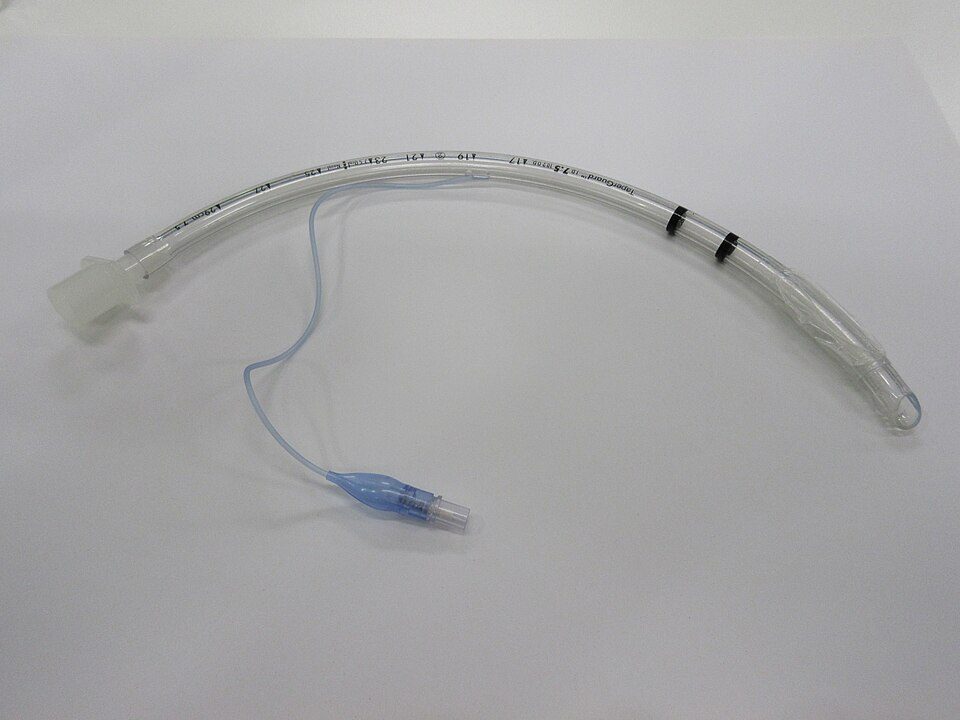
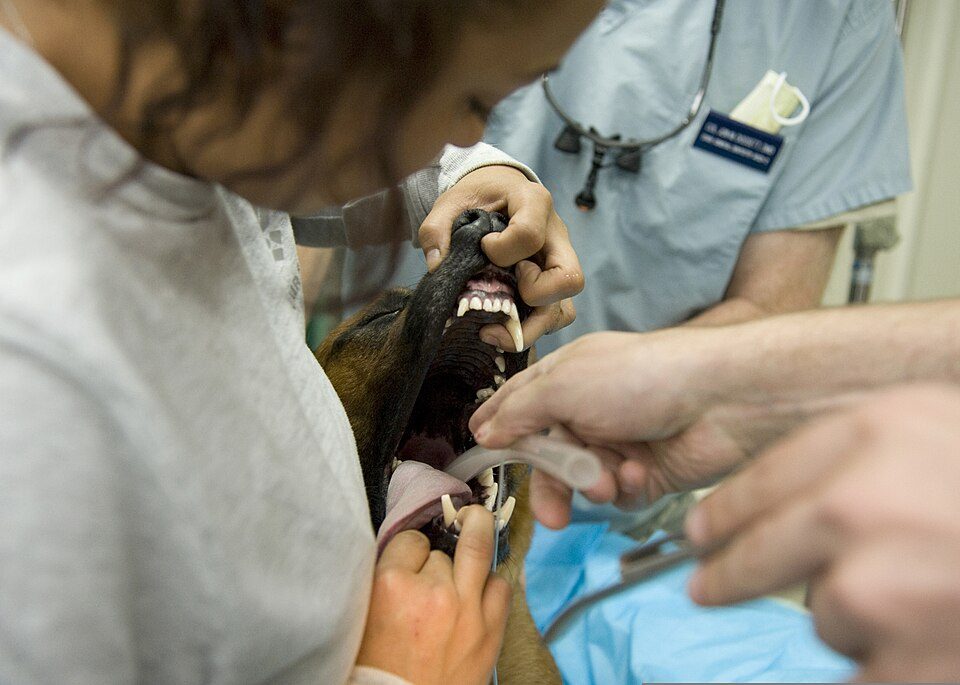
A Murphy-type ETT has a bevelled tip, a side hole (the Murphy eye) that lets gas flow if the tip is blocked, an inflatable cuff and a pilot balloon that shows whether the cuff holds air. AAHA lists clear cuffed polyvinylchloride (PVC), silicone and self-sealing baffled tubes.1 Lubricate only the cuff with sterile water-soluble lubricant, keeping it out of the Murphy eye; lubricant improves the seal.12
| Patient | Internal diameter | Note |
|---|---|---|
| Adult cat | Most need 3.5 to 5.0 mm; stock 2.0 to 5.5 mm | Cuffed or uncuffed, with Murphy eye |
| Dog | Weight gives a first guess only | Brachycephalic dogs often get smaller tubes than weight predicts |
| Rabbit | 2 to 4 mm | Long narrow pharynx and large tongue make intubation hard |
| Horse, 450 kg | 26 to 30 mm | Placed blindly; 70 to 100 kg foal 15 to 18 mm |
Source: AAFP feline guidelines; Kim et al. 2026; Merck Veterinary Manual, Management of Rabbits; Lee, Equine Anesthesia notes.26910
Procedure: induction and intubation
- Prepare. Turn on and check the machine, circuit and monitors. Lay out several tube sizes, a laryngoscope, a stylet if wanted, a face mask, gauze or tubing to tie the tube, and a cuff syringe.1
- Measure and check the tube. Hold it against the neck. AAHA places the connector at or just outside the incisors and the tip midway between the larynx and the thoracic inlet.1 Mark the length with tape; a tube that is too long can enter a bronchus.2 Inflate the cuff to check for leaks, then deflate it.10
- Preoxygenate with a mask or flow-by, for about 3 minutes in a tolerant cat.2
- Induce to effect. Draw up the calculated dose but expect to give part of it. If propofol is used alone, give it in quarter-dose increments over about 2 minutes; the full calculated dose is rarely needed when it is given at the right speed.4
- Check depth. Position the patient (cats sternal), check general muscle relaxation, then jaw tone.2
- Intubate. Use the laryngoscope to see the arytenoids, keep the tube tip close to the glottis and advance gently on inspiration, when the opening is widest.2
- Confirm placement (Figure 2) before you do anything else.
- Connect and seal. Connect to the circuit with oxygen flowing, check the heartbeat and mucous membranes, then inflate the cuff (below).2
- Secure the tube with gauze or tubing tied behind the ears, and apply eye lubricant.12
Inflating the cuff
A properly inflated cuff seals the airway for positive pressure breaths and stops inhalant leaking out, but overinflation can damage the trachea. AAHA method: with oxygen flowing, close the pop-off valve (or press the safety button), give a manual breath to 15 to 20 cm H2O and listen at the mouth for a hiss. If you hear one, inflate slowly during another breath until the sound stops. Then open the pop-off valve at once and tie the tube in.1 For cats, the AAFP uses 0.5 mL increments of air from a 3 mL syringe until no leak is heard at a circuit pressure of 16 to 18 cm H2O.2 A cuff pressure gauge is more objective. In a 2022 survey, the most often chosen target cuff pressure was 20 to 30 cm H2O, but most anesthetists did not measure it.5
When you reposition the patient, disconnect the tube from the breathing circuit so the tube does not rotate in the trachea; rotation can tear the trachea, especially with an overinflated cuff.1
Flowchart: is the tube in the trachea?
The capnograph adapter can be placed on the tube during intubation to confirm placement.1 The AAFP adds two hands-on checks: after intubation the arytenoids should be seen on either side of the tube, and palpating the neck should reveal one firm tube (the trachea). If two are felt, the ETT is in the esophagus.2
Species differences
Cats
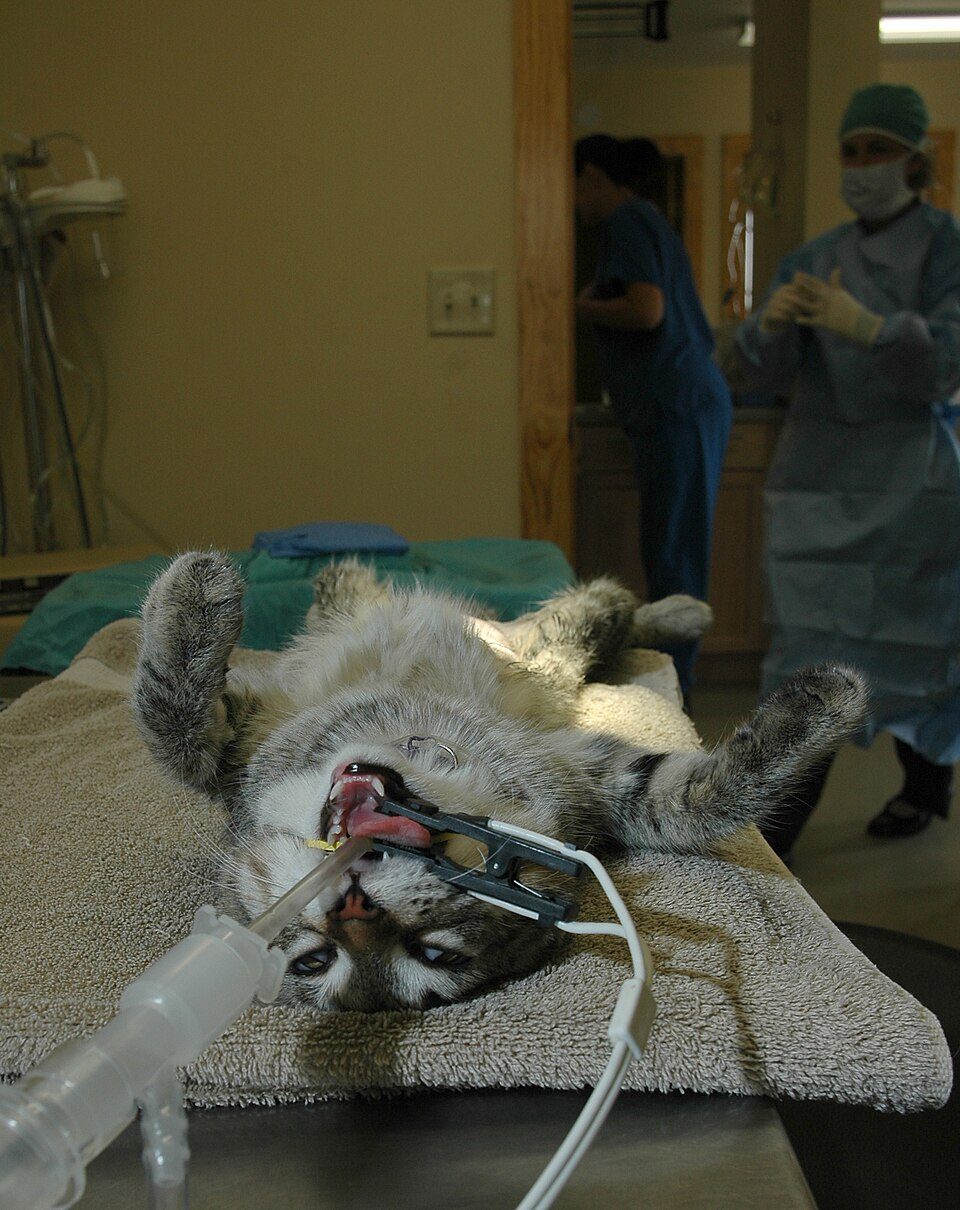
Cats are hard to intubate. Use a laryngoscope, wait for an adequate depth, and use topical lidocaine. Drop no more than 0.2 mL of 2% lidocaine without epinephrine onto the arytenoids from a 1 mL syringe with no needle or catheter attached, because these can come off into the airway. Wait 60 to 90 seconds on oxygen before trying. If the cat coughs or resists, stop and give more induction agent. If laryngospasm (the glottis snapping shut) develops, stop, give oxygen, check depth and give more induction agent if needed. Lidocaine can be reapplied with another 60 to 90 second wait. Laryngospasm is usually self-limiting.2
Overinflated cuffs can tear the feline trachea, and intrathoracic tears carry a poor prognosis.2 A feline supraglottic airway device (v-gel) sits over the larynx without entering the trachea. It can be placed at a lighter plane, faster and with fewer attempts than an ETT.2
Dogs
Body weight gives a first guess for tube size, but tracheal diameter varies by breed even at similar weights.6
Brachycephalic dogs
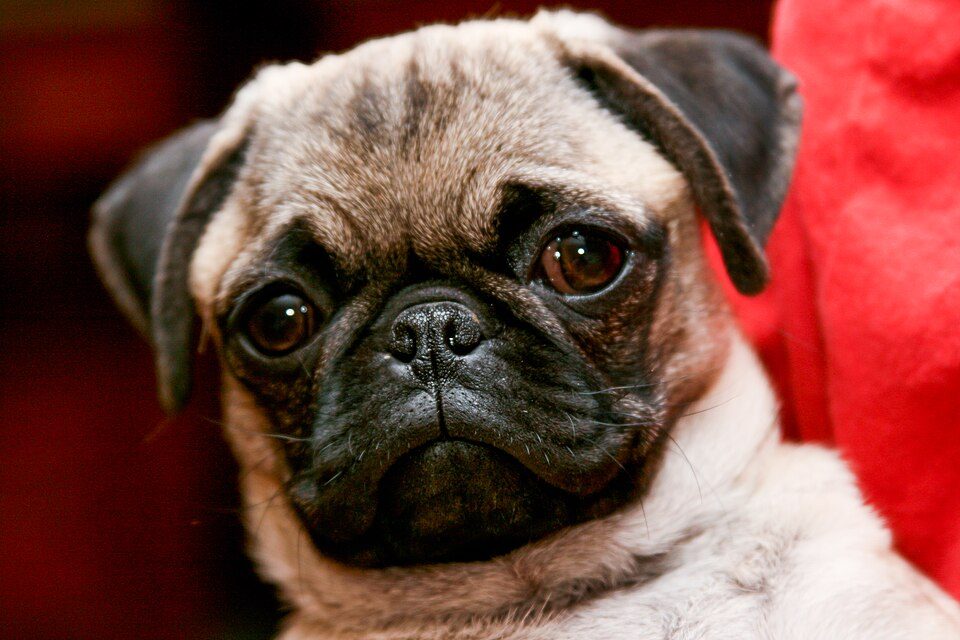
Brachycephalic breeds (short-nosed dogs such as Pugs, Bulldogs and French Bulldogs) are more prone to upper airway obstruction and have more airway-related anesthetic complications.1 They often take a smaller tube than their weight predicts, so prepare extra small sizes.6 Common recovery measures are to delay extubation until gag and swallowing reflexes are strong, keep the dog sternal with the head raised, and give oxygen by mask or flow-by.8
Rabbits and horses
Rabbits have a long narrow pharynx and a large tongue. Lidocaine on the epiglottis reduces laryngospasm, and tube size (2 to 4 mm) is critical.9 Horses are intubated blindly, with a smooth fit and no forcing, after the mouth is rinsed so food is not carried into the trachea.10
Calculation
Worked example. A 4 kg cat is ordered propofol at 4 mg/kg IV to effect. Propofol is 10 mg/mL.12
Dose: 4 kg × 4 mg/kg = 16 mg (kg cancels).
Volume: 16 mg ÷ 10 mg/mL = 1.6 mL (mg cancels).
Quarter-dose increment: 1.6 mL ÷ 4 = 0.4 mL. Give 0.4 mL, wait, reassess jaw tone, and repeat only if needed.4
Safety, legal and client education
- Alfaxalone is CIV: record it in the controlled substance log.13
- Label an opened PropoFlo 28 vial with "Date Opened" and "Use By", keep it at room temperature and discard it after 28 days.12
- AAHA does not recommend mask or chamber inductions: they cause stress, delay airway control and pollute the room with inhalant.1
- Keep the capnograph on until extubation and watch SpO2 through recovery.1 Extubate when breathing and SpO2 are normal and the patient can protect its airway.1 Dogs are usually extubated when they swallow; cats earlier, at a strong palpebral reflex, ear flick or slight tongue movement.7
- Client point: tell owners of short-nosed breeds that their pet carries a higher airway risk under anesthesia, so the team plans a longer, closely watched recovery.18
Common mistakes and exam traps
- Giving the whole calculated induction dose as a fast bolus. Dose to effect; rapid propofol causes apnea.4
- Judging ketamine depth by eye position. Ketamine keeps eyes central and jaw tone high.4
- Relying on chest movement or a pink tongue alone to confirm the tube. Use the EtCO2 waveform, plus the arytenoid view and neck palpation.12
- Forcing the tube through a feline glottis in spasm. Stop, give oxygen, deepen and wait.2
- Leaving the pop-off valve closed after the leak check.1
- Rolling the patient with the tube still connected to the circuit.1
Memory aids
SEE IT, BAG IT, FOG IT, GRAPH IT: the four AAHA signs of tracheal placement: tube seen between the arytenoids, bag moving, condensation in the tube, EtCO2 tracing (memory aid).
ONE TUBE GOOD, TWO TUBES BAD: one firm tube in the neck is the trachea; two means the ETT is in the esophagus (memory aid).
POINT 2, WAIT 90: no more than 0.2 mL of 2% lidocaine on the feline arytenoids, then wait 60 to 90 seconds (memory aid).
Ketamine KEEPS: ketamine keeps the palpebral reflex, jaw tone, central eyes and heart rate (memory aid).
Etomidate for the Engine: etomidate barely changes heart rate or blood pressure, so it is chosen for cardiac patients (memory aid).
Quick review
- Dose every induction drug to effect.
- Propofol: 10 mg/mL emulsion, rapid and short, apnea and hypotension, no analgesia.
- Alfaxalone: neuroactive steroid, IV or IM, no analgesia, CIV.
- Ketamine with a benzodiazepine: jaw tone, central eyes, raised heart rate.
- Etomidate: cardiovascular stability, myoclonus without premedication, adrenal suppression.
- Preoxygenate before induction.
- Largest tube that passes the arytenoids easily; measure so the tip stops before the thoracic inlet.
- Confirm with arytenoid view, bag movement, condensation and an EtCO2 tracing.
- Inflate the cuff during a 15 to 20 cm H2O breath until the leak stops, then open the pop-off.
- Cats: 0.2 mL lidocaine, wait 60 to 90 seconds; laryngospasm means stop, oxygen, deepen.
- Disconnect the tube from the circuit before turning the patient.
- Brachycephalic dogs: smaller tubes, late extubation, sternal with head raised.