Introduction
An itchy pet is one of the most common reasons a client calls the clinic. Fleas, ticks, mites and lice live on or in the skin. Heartworm mainly damages the pulmonary arteries,2 but it is found the same way most skin parasites are: by a technician who collects the right sample and reads it carefully. The technician combs the coat, scrapes the skin, swabs the ears, plucks hairs, runs the heartworm test and recognizes what is under the microscope. The veterinarian then makes the diagnosis and picks the treatment.
This guide covers the life cycles you need to know, which test finds which parasite, how to do each test well, and the zoonotic and prevention points you will explain to clients.
Key facts
- Ctenocephalides felis, the cat flea, is the most common ectoparasite of dogs in North America. It can carry Rickettsia, Bartonella henselae and the tapeworm Dipylidium caninum.5
- Flea dirt placed on a wet towel dissolves and turns red, because it is dried blood passed by adult fleas.5
- Demodex lives in hair follicles, so it needs a deep scraping of a small, squeezed area. Sarcoptes needs several scrapings over large areas of the ear margins, elbows and hocks, and repeated scrapings may still be negative.814
- Borrelia burgdorferi (Lyme disease) can need 24 to 48 hours of tick feeding to pass to the host, but Ehrlichia can pass within 3 to 6 hours. Remove ticks promptly.7
- Heartworm antigen tests detect a protein from adult female worms. Test about 7 months after the last possible exposure; there is no value in testing a dog younger than about 7 months.23
- CAPC advises testing all dogs every year with both an antigen test and a microfilaria test, including dogs on prevention.3
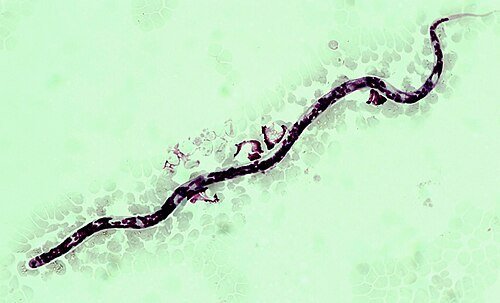
- The modified Knott test mixes 1 mL of EDTA or heparin blood with 9 mL of 2% formalin. Merck names it as the test for telling Dirofilaria immitis from Acanthocheilonema reconditum by size and shape.1
- In cats, heartworm testing uses antigen plus antibody tests. Microfilaria tests are not recommended in cats.1
How the VTNE tests this
- Choose the test: pick deep scraping, superficial scraping, tape preparation, ear swab or trichogram for a described patient. Domain 4 Task C covers laboratory tests including parasitology, and K25 covers laboratory principles, procedures and methods.17
- Identify: name a flea, tick, mite or louse from a description, or tell D. immitis microfilariae from A. reconditum.
- Interpret timing: explain why a heartworm antigen test done too soon after exposure can be negative.
- Troubleshoot: explain a negative scraping in a dog that still looks like it has scabies, or an antigen negative dog with signs.
- Educate: give zoonosis and prevention advice. K36 covers public health, including infection control and zoonosis.17
Core concepts
Fleas and the flea life cycle
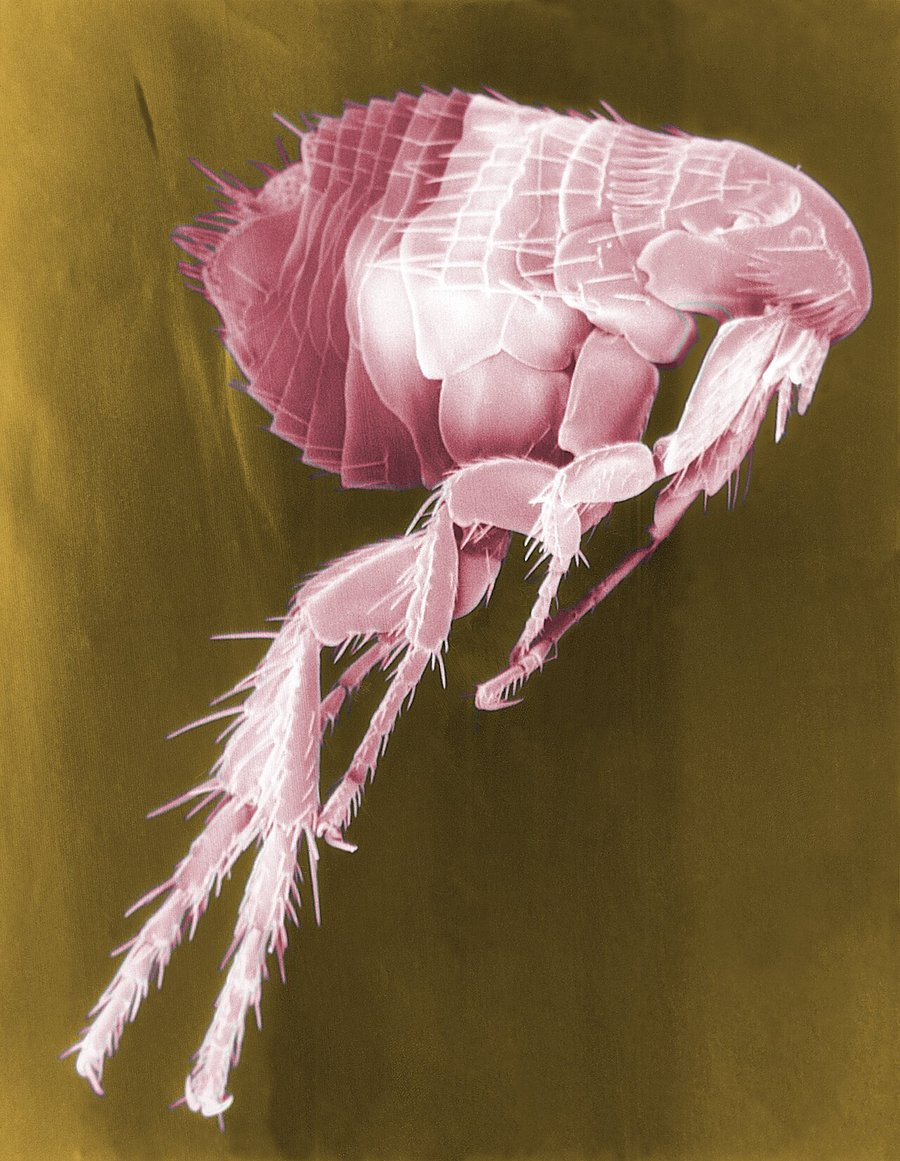
Adult fleas live on the host and feed on blood, but most of the population lives in the home as eggs, larvae and pupae. Females start laying within 20 to 24 hours of their first blood meal and can lay 40 to 50 eggs a day. The eggs are pearly white, oval and about 0.5 mm long, and they fall off the pet within a few hours.5
Larvae are maggot-like, about 0.5 cm long, and feed on flea feces and organic debris. They avoid direct sunlight, so they develop in carpets, under furniture and in shady spots where pets rest. Pupae sit in a sticky cocoon. New adults can start to emerge about 8 days after pupation begins, but a pre-emerged adult can stay quiet in the cocoon for up to 30 weeks in cool conditions.5 This is why clients still see fleas weeks after starting treatment.
Heavy infestations can cause iron deficiency anemia, especially in young animals. Flea allergy dermatitis (FAD) is a hypersensitivity to flea saliva.5
The Dipylidium link. Dipylidium caninum is the flea tapeworm. Flea larvae eat tapeworm egg packets passed in the pet's feces. The tapeworm develops inside the flea into a stage called a cysticercoid, and the dog or cat is infected when it swallows the adult flea while grooming. The motile segments (proglottids) are 10 to 12 mm long and look like cucumber seeds.6 A pet with tapeworm segments needs flea control as well as a dewormer.
Ticks
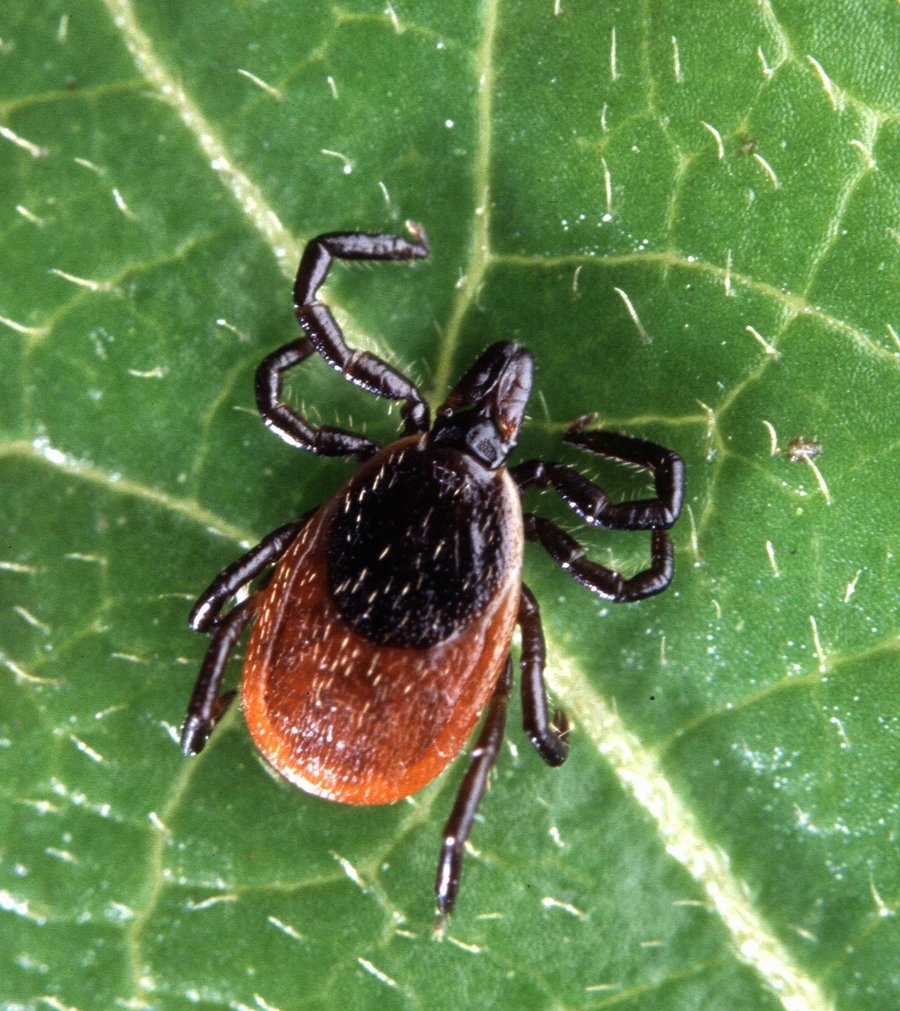
Tick larvae have 6 legs; nymphs and adults have 8.7 The hard ticks common on dogs and cats in North America are three-host ticks: the larva, nymph and adult each drop off to molt and then find a new host.7 Know these four:
- Ixodes scapularis (black-legged or deer tick): Lyme disease (Borrelia burgdorferi) and anaplasmosis (Anaplasma phagocytophilum). Only Ixodes ticks are known to transmit the Lyme spirochete.7
- Rhipicephalus sanguineus (brown dog tick): Ehrlichia canis, Babesia, Hepatozoon canis and Rocky Mountain spotted fever. It lives inside homes and kennels, even in cold regions.7
- Dermacentor variabilis (American dog tick): Rocky Mountain spotted fever (Rickettsia rickettsii) and tularemia. Dermacentor is the genus most often linked with tick paralysis in the United States.7
- Amblyomma americanum (lone star tick): Ehrlichia chaffeensis and E. ewingii, tularemia and Cytauxzoon felis in cats.7
Mites
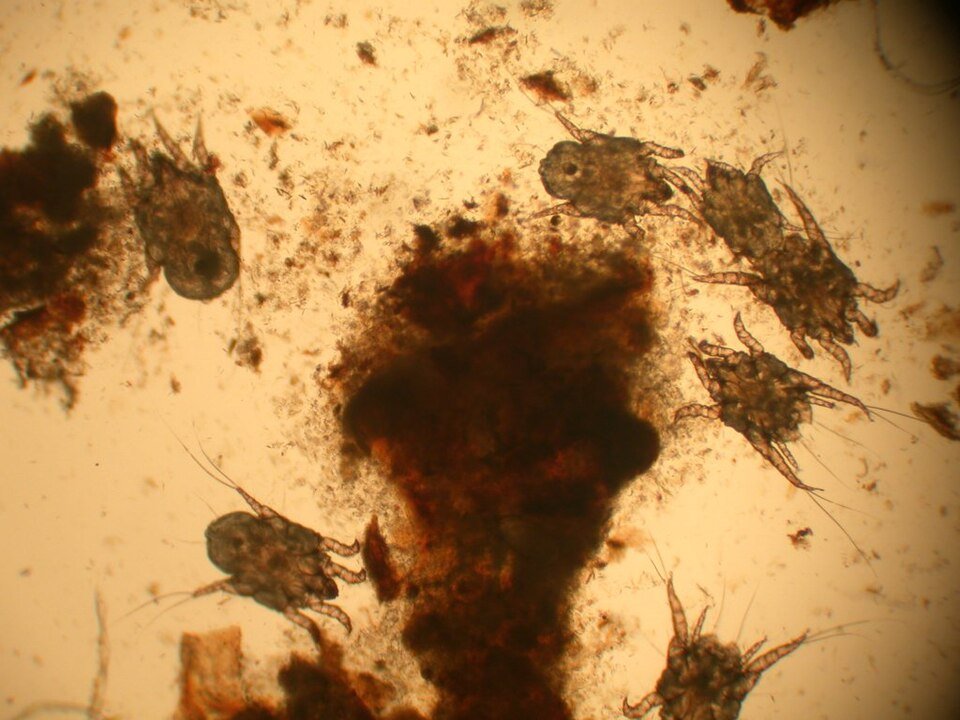
- Sarcoptes scabiei (scabies): burrows in the outer skin layer and causes intense itching. Mites are usually found on the ear margins, lateral elbows and lateral hocks. It is zoonotic and spreads by direct contact or fomites such as clipper blades.8
- Demodex: elongated, cigar-shaped mites that live in hair follicles. Small numbers are normal skin fauna, and disease is an overgrowth linked to an underlying problem. Demodicosis is not contagious, and canine Demodex has no zoonotic potential.9
- Otodectes cynotis (ear mite): lives in the external ear canal, mainly in cats under 1 year and feral cats. The debris can look like coffee grounds. Cats can carry more than 1,000 mites per ear.10
- Notoedres cati (feline scabies): found in skin scrapings, first on the ear margins, with thickened skin on the ear tips, face and feet. Owners can get an itchy rash on the arms or legs that does not persist.11
- Cheyletiella ("walking dandruff"): lives on the skin surface, moves scale around and is contagious by direct contact. It is not host-specific and can move between dogs, cats and rabbits.12
Lice
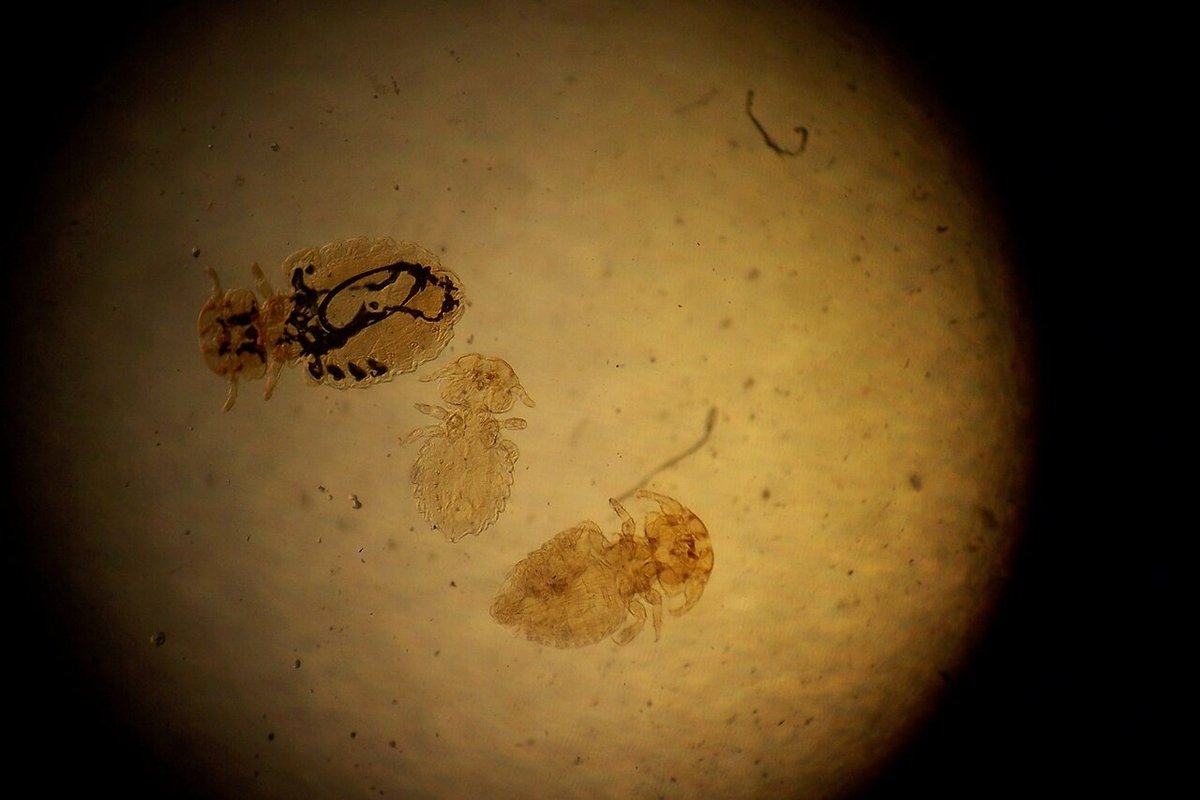
Lice are flattened, wingless insects with three pairs of legs, about the size of fleas. Their eggs (nits) are glued to the hair shafts and hatch in 1 to 2 weeks. Chewing lice have wide heads; sucking lice have narrow heads. Trichodectes canis (dog chewing louse) and Felicola subrostratus (cat chewing louse) are the chewing lice, and Linognathus setosus is the dog sucking louse. Lice are highly host-specific: pet lice do not infest people, and dog and cat lice are not shared.13 T. canis can also carry Dipylidium.13
Heartworm
Dirofilaria immitis is spread by mosquitoes. Microfilariae (the larvae found in the blood) must develop in a mosquito to the infective L3 stage. In the dog, it takes about 6 to 7 months for larvae to become adults that release microfilariae.34 This prepatent period drives all heartworm test timing.
Procedure or technique
Flea combing
- Comb the coat, keeping the comb in contact with the skin.12
- Tap the debris onto a damp white paper towel. Black specks that dissolve and turn red are flea dirt.5
- Look at the debris under the microscope too; a comb also recovers Cheyletiella mites.12
Skin scraping
- Gather mineral oil, a dull scalpel blade, slides and coverslips. CAPC uses a rounded #10 or #20 blade.814
- Choose untreated lesions. Scrape the edge of a lesion, not the excoriated center.14
- Put a drop of oil on the blade and on the skin.14
- Superficial scraping (Sarcoptes, Notoedres, surface mites): scrape a large area, 2 cm2 or more, in the direction of the hair, and gradually increase pressure. Minor capillary bleeding is common. For Sarcoptes, CAPC advises scraping firmly enough to sample the full thickness of the epidermis, giving a blood-tinged sample, at several sites.814
- Deep scraping (Demodex): pick a small area, under 2 cm2, squeeze the skin between thumb and finger to push mites out of the follicles, and scrape until the area turns red.914
- Spread the material in oil on a slide, add a coverslip and scan the whole slide with the 10x objective.814
Finding just one Sarcoptes or Cheyletiella mite or egg is diagnostic, but a negative scraping does not rule out scabies.814
Acetate tape preparation
- Use clear, not frosted, tape. Loop it sticky side out or press a strip straight onto the skin.1214
- Part the hair and press the tape firmly on the skin around lesions.
- Stick the tape on a slide and scan at low power.
Tape picks up lice, Otodectes and Cheyletiella mites, flea dirt and scale.14
Trichogram (hair pluck)
Pluck a small group of hairs with a hemostat, lay them in a drop of mineral oil on a slide, add a coverslip and examine at low power.14 CAPC suggests it for Demodex on feet, between the toes and around the eyes, where scraping is difficult.9 About half of dogs with Demodex have a positive trichogram, so a negative pluck does not rule it out.14 Plucked hairs are also checked for dermatophyte spores.16
Ear swab cytology
- Collect samples before any ear cleaning, and use a clean otoscope cone for each ear.15
- Mite check: mix cerumen with a little mineral oil on a slide, coverslip and scan at low power.15
- Stained smear: roll the swab onto a slide, stain with a three-step modified Giemsa (quick stain) or modified Wright stain, and examine from low power up to oil immersion. Heat fixing is not needed.15
- Report yeast (Malassezia), cocci, rods and white blood cells. Small numbers of cocci and yeast are normal in healthy ears.15
Heartworm testing
- Antigen test (in-clinic or reference lab): detects a protein made mainly by the adult female's reproductive tract.3 Never mix samples from different animals; this can block antigen detection or dilute it below the detection limit.3
- Heat treatment: when heartworm is suspected but the antigen test is negative, heating the serum can release antigen held in antigen-antibody complexes. It is not done routinely, and it makes later antibody tests invalid.3
- Modified Knott test: add 1 mL of EDTA or heparin blood to 9 mL of 2% formalin, invert 5 to 6 times, centrifuge (Merck gives 173 g for 5 minutes), pour off the supernatant, stir 1 to 2 drops of 0.1% methylene blue into the sediment, and examine the whole volume at 10x.1
- Filter test: the same blood and formalin mix is pushed through a 5 micrometer filter, which is then stained and read. Merck lists it with the Knott test as one of the two most sensitive microfilaria tests.1
- Direct smear and buffy coat: a drop of fresh blood under a coverslip, or the buffy coat of a spun hematocrit tube. These are less sensitive.1
| Parasite | Where on the animal | Test that finds it | Zoonotic? |
|---|---|---|---|
| Fleas (C. felis) | Coat; most stages in the home | Flea comb; wet paper test for flea dirt | Yes: bites, Bartonella, Rickettsia, Dipylidium |
| Ticks | Attached to skin | Visual exam; identify the removed tick | Ticks carry agents that infect people (Lyme, RMSF) |
| Sarcoptes scabiei | Ear margins, elbows, hocks | Several broad scrapings; may be negative | Yes |
| Notoedres cati | Ear margins, face, feet (cat) | Skin scraping | Yes: brief rash in owners |
| Demodex | Hair follicles | Deep scraping; trichogram; sometimes fecal flotation | No (canine) |
| Otodectes cynotis | Ear canal | Otoscope; ear swab in mineral oil | Rarely |
| Cheyletiella | Skin surface, back | Flea comb, tape preparation, hair pluck | Yes, but uncommon |
| Lice | Hair; nits glued to shafts | Visual exam; tape preparation | No: host-specific |
| D. immitis | Pulmonary arteries, heart; microfilariae in blood | Antigen test plus Knott or filter test (dog); antigen plus antibody (cat) | Spread by mosquito bite |
Sources: CAPC guidelines for fleas, ticks, Sarcoptes, Notoedres, Demodex, Otodectes, Cheyletiella, lice and heartworm; Merck Veterinary Manual; Ford and Mazzaferro.1357891011121314
| Feature | Dirofilaria immitis | Acanthocheilonema reconditum |
|---|---|---|
| Importance | Heartworm | Nonpathogenic, lives under the skin; spread by fleas |
| Number in blood | Usually many | Usually few |
| Motion (fresh blood) | Stationary | Progressive |
| Head | Tapered | Blunt |
| Body and tail | Straight body and tail | Curved body, "button-hook" tail |
| Length (Knott test) | 300 to 322 micrometers | 250 to 288 micrometers |
| Width | 6.7 to 7.0 micrometers | 4.7 to 5.8 micrometers |
Source: CAPC heartworm guideline (morphology); Merck Veterinary Manual (A. reconditum nonpathogenic); CAPC fleas (flea transmission).135
Flowchart: the itchy dog
Species differences
- Dog: Sarcoptes scabiei var canis prefers dogs and other canids. Cats are rarely infested.8
- Cat: Notoedres cati causes feline scabies.11 Ear mites are common in kittens, and a cat with heavy ear debris may have only one or two mites, while another with clean ears may carry 50.10 Felicola subrostratus is usually found in large numbers only on old or sick cats.13
- Cat heartworm: cats usually have only one or two worms, which live 2 to 4 years.4 Antigen tests are less useful because of these low worm burdens, so cats are tested with antigen and antibody tests. A positive antibody test shows exposure, current or past. Microfilaria tests are not recommended.1
- Rabbits: Cheyletiella can move between dogs, cats and rabbits, so treat every in-contact animal.12
Heartworm test timing
| Situation | What to do |
|---|---|
| Puppy under about 7 months | Testing has no value yet; start prevention. Test 6 to 7 months after prevention starts. |
| Dog over 7 months, not on prevention | Test now, start prevention, and test again 7 months later. |
| Dog on year-round prevention | Test every year with antigen and microfilaria tests. |
| Antigen positive | Check for microfilariae before the first macrocyclic lactone dose. |
Sources: Merck Veterinary Manual, Heartworm Disease; CAPC heartworm guideline; FDA heartworm facts.234
Calculation
Scaling the modified Knott test. The standard ratio is 1 mL of blood to 9 mL of 2% formalin, a 1 in 10 dilution of the blood.1
You only have 0.6 mL of EDTA blood from a small dog. Keep the same ratio:
Formalin needed = 0.6 mL blood × (9 mL formalin ÷ 1 mL blood) = 5.4 mL of 2% formalin.
Total volume = 0.6 mL + 5.4 mL = 6.0 mL. Check: 0.6 ÷ 6.0 = 0.1, still 1 in 10.
Test timing. A dog's last possible mosquito exposure was 31 October. Antigen tests are reliable about 7 months after the last exposure: 31 October + 7 months = end of May. A negative test in January would be too early to trust.2
Safety, legal and client education
- Tick removal: wear gloves, grasp the tick close to the skin with fine forceps, and pull with slow, steady pressure. Save it in tape or a vial of alcohol for identification.7
- Scabies: Sarcoptes does not survive long off the host, but clipper blades can carry it.8 Wear gloves and clean clippers between patients.
- Flea control: CAPC advises year-round flea control for all dogs, and every pet in the home must be treated. An established infestation can take several months to control.5
- Heartworm: dogs 7 months and older should be tested before starting prevention. The American Heartworm Society's "Think 12" message is 12 months of prevention and a test every 12 months.4
- Owners with rashes: itchy people at home can point to Sarcoptes, Notoedres or Cheyletiella. Tell the veterinarian, and advise the owner to see their own doctor.81112
- Reassure: canine demodicosis is not contagious to people, and pet lice do not infest people.913
Common mistakes and exam traps
- "Negative scraping, so no scabies": severe disease can be present with repeated negative scrapings.8
- Testing too early: an antigen test 4 months after exposure can be negative in an infected dog. Wait about 7 months.2
- Trusting a negative microfilaria test: Merck puts the share of infected dogs with no circulating microfilariae at about 20% to 33%.12
- Judging species by motion on a fixed sample: motion can only be judged in fresh blood. On a Knott test, measure length and look at head and tail shape to tell D. immitis from A. reconditum.1
- Cleaning the ear first: take cytology and mite samples before cleaning.15
- Calling Demodex contagious: it is normal fauna, and disease reflects an underlying problem.9
Memory aids
D for Deep: Demodex lives deep in the follicle, so squeeze and scrape deep (memory aid).
SEE the scabies sites: Sarcoptes on the Ears (margins), Elbows and hocks; scrape all of them (memory aid).
Seven and nine: wait 7 months after exposure for the antigen test; the Knott test uses 1 mL of blood in 9 mL of formalin (memory aid).
Button-hook is benign: the button-hook tail belongs to A. reconditum, the nonpathogenic microfilaria (memory aid).
Six for seed, eight for adult: tick larvae (seed ticks) and lice have 6 legs; tick nymphs, adult ticks and adult mites have 8 (memory aid).
Quick review
- Most of a flea population lives off the pet as eggs, larvae and pupae.
- Flea dirt turns red on a damp towel.
- Pets get Dipylidium by swallowing infected fleas; treat fleas too.
- Ixodes carries Lyme; Borrelia transmission can need 24 to 48 hours of feeding.
- Brown dog ticks live indoors and carry Ehrlichia canis and Babesia.
- Demodex: deep scrape of a squeezed small area, or trichogram.
- Sarcoptes: several broad scrapings of ear margins, elbows and hocks; negatives are common.
- Ear swabs: mineral oil for mites, stained smear for yeast and bacteria, before cleaning.
- Tape preparations find Cheyletiella, lice and flea dirt.
- Antigen tests detect adult females; test about 7 months after exposure.
- Knott test: 1 mL blood plus 9 mL 2% formalin; it separates D. immitis from A. reconditum.
- Cats: antigen plus antibody tests; no microfilaria tests.